


From Cold War Germany to chaotic India, here’s how duty, work, and choice shaped the places I’ve seen—and what I actually learned along the way.
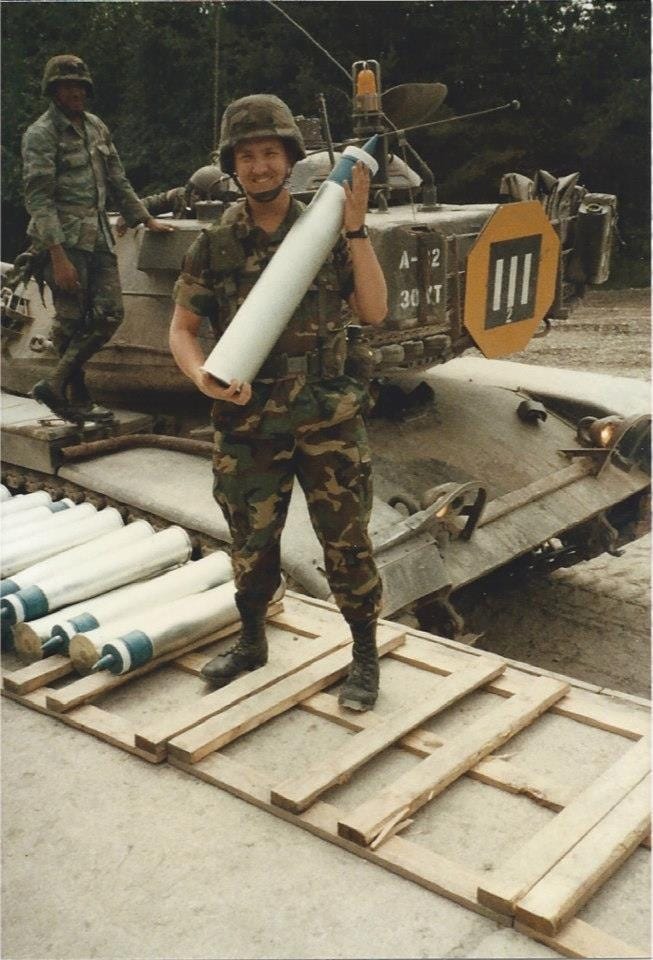
A friend and I were talking about where we had actually traveled in the world. We had strict rules: if you just connected through an airport, a port, or never left the plane, it doesn’t count. He was Navy, I was Army, so we both had plenty of “technically been there” moments that got disqualified.
In spite of those rules, I have visited 23 countries so far. And I’m definitely not done. Here they are grouped by why I was there (I still count the old West Germany and post-1991 Germany as separate countries):
Army (stationed or deployed) — West Germany, Iraq, Kuwait, Saudi Arabia, Bahrain, Somalia, South Korea
Post-military work — UAE, Australia, Sweden, Finland, Belgium, Turks & Caicos, India
UK, Canada, France — Multiple trips (pure work, pure vacation, and combinations)
Leisure / Vacation Only — Germany (post-1991), The Netherlands, Austria, Italy, Hungary, Mexico
As you can see from my Army and post-military work… my travel has been “interesting.”
Army (stationed or deployed)
West Germany, Iraq, Kuwait, Saudi Arabia, Bahrain, Somalia, South Korea
The Army years weren’t all assignments I didn’t choose. For my first duty station, I specifically asked for Europe—I wanted West Germany, and I got it. Those first three years were fantastic. I was young, single, stationed in a place with deep history, great beer, easy travel to neighboring countries, and a front-row seat to the last years of the Cold War. It felt like the best possible start to adult life.
Then the world changed.
I deployed to Saudi Arabia for Desert Shield. Some of us got a 24-hour R&R pass to Bahrain. During Desert Storm I “visited” Iraq, then came back out through Kuwait right after liberation. Somalia in the ‘90s was the poorest place I’ve ever been. When they say the average income is $400 a year, it really means about ten people have all the money and everyone else has close to none. South Korea, by contrast, showed me what a disciplined, determined society can rebuild after war.
Then the world changed again. And I went back to Iraq again.


You see places very differently when you’re there in uniform. Some visits were chosen, others were handed to you by history and orders. In every case, the beauty and the brokenness both hit harder. Those years taught me how quickly “normal” can vanish and how resilient people can be when everything is stacked against them.
Post-military work
UAE, Australia, Sweden, Finland, Belgium, Turks & Caicos, India
These trips were a strange shift after the Army years. Instead of deserts and combat zones, I was suddenly flying to gleaming modern cities, quiet European towns, and island resorts—all for work.
Belgium took me to Kortrijk (not Brussels, and nothing to do with the EU or NATO) for some U.S. Defense Industrial Base manufacturing work. Quiet town, serious mission.
Turks & Caicos still makes people raise an eyebrow. It sounds like a boondoggle, but it wasn’t. It was November 2020, peak COVID chaos. We needed a small international team from four different countries in the same room face-to-face. Our travel specialist checked every possible combination of quarantine and entry rules… and the only two places on the planet that worked were Dubai and Turks & Caicos. We chose the islands. Beautiful setting, very productive meetings, zero vacation vibes.


India was the polar opposite—overwhelming, chaotic, colorful, and impossible to forget. The sheer energy and scale of the place reset my internal baseline for what “crowded” and “resilient” actually mean.
Each trip had its own flavor of “interesting,” but I’ll leave most of the details there.
UK, Canada, France
Multiple trips: pure work, pure vacation, and combinations
These three countries are in their own category because I’ve been to each of them multiple times, for very different reasons.
I’ve flown in for pure work, stayed a few extra days and turned trips into hybrids, and gone back purely for vacation. The UK and Canada feel familiar at first (shared language, similar humor), but the more time you spend there the more you notice the subtle but real differences in how people view government, healthcare, cities, and personal space. France is the country that made me understand why so many Americans fall in love with it—the food, the history, the unapologetic Frenchness.


Having seen them through both work lenses and leisure lenses gave me a much richer picture than any single type of trip would have.
Leisure / Vacation Only
Germany (post-1991), The Netherlands, Austria, Italy, Hungary, Mexico
These were the ones I chose purely for myself (and my wife). No uniform, no work laptop, no schedule handed to me by someone else.
I finally got to see the “other” Germany decades after I’d served in the West. The Netherlands charmed me with its bicycles, canals, and straightforward people. Austria and Italy delivered The Eternal City: Rome, the history, and the kind of meals you still talk about years later. Hungary felt like Central Europe in its purest form—proud, layered, and a little bit melancholy. Mexico reminded me that great food and warm people can make up for almost anything.


These trips were slower, lighter, and often more joyful. They let me see places with completely different eyes.
What I Actually Learned
After 23 countries, a few wars, too many layovers, and one very patient wife, three truths stand out.
1. Individual people are the same everywhere.
Strip away the flags and languages, and the core concerns are universal: family, work, love, safety, friendship. I’ve seen it in a Somali market, a crowded Indian street at rush hour, a Korean shop, and a German beer garden. The hopes and worries don’t really change.
2. Countries and cultures are profoundly different—and those differences matter.
India hit me especially hard with this. The sheer scale, energy, and contradictions within one country forced me to rethink a lot of assumptions. I saw the quiet consensus-driven order of Nordic societies, the tribal realities beneath formal governments in parts of Africa and the Middle East, the cheerful resilience of post-liberation Kuwait, and the relaxed chaos of Mexico. Travel like this doesn’t just broaden your horizons—it makes you examine your own culture more honestly.
3. If you get the chance, do it.
I said yes to deployments that scared me, yes to exhausting-looking work trips (including the one that dropped me in India), and yes to vacations when money was tight. Almost every single time, I came home richer in ways that don’t show up on a balance sheet. The hardest places often taught me the most.
So my advice is simple: collect the stamps. Break a few comfort zones. Take the trip. You won’t regret the countries you visited nearly as much as the ones you didn’t.
Where Next?
At this point I wouldn’t even call it a bucket list anymore. I’ve already blown way past any bucket list I could have imagined when I was 18 and my only real dream was to see West Germany and France someday.
Even so, the map still has plenty of white space that calls to me. Japan and New Zealand are high priorities. I’d love to experience Argentina and get a real taste of South America. A slower, deeper return to Italy is definitely in the cards.
And the big one I’m actively thinking about is recreating the classic route of the Orient Express — Paris through the Alps, Vienna, Budapest, and on to Istanbul. That journey feels like the perfect way to tie together so many threads from the last few decades.
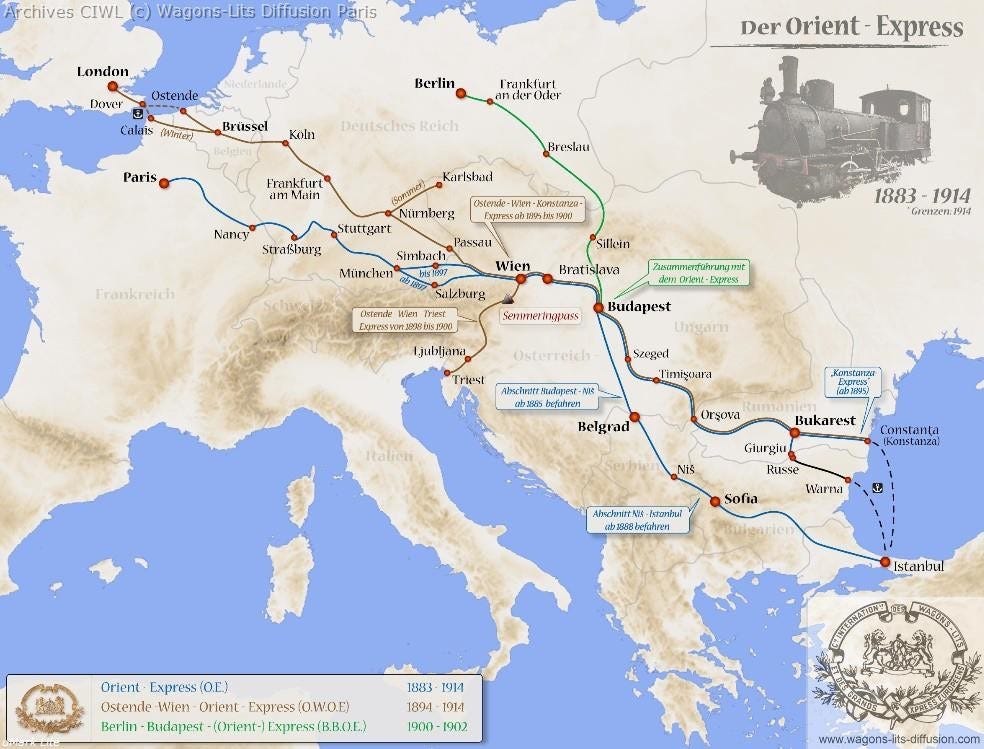
The map isn’t finished, and neither am I.
Looks like Graf. I helped run Range 117 when I rotated there with 2ACR from 88-91
Great fimes