


October 1, 331 BC (Battle of Gaugamela). October 10, 732 AD (Battle of Tours). October 14, 1066 AD (Battle of Hastings). June 18, 1815 AD (Battle of Waterloo). June 4, 1942 AD (Battle of Midway). June 6, 1944 AD (D-Day).
Dates that transformed the world. Dates that had military brilliance, heroism, and amazing feats of military arms.
I want to tell you one story from June 6, 1944. A story of a man who was already broken by war a quarter century earlier. He had wealth, fame, and luxury. He had no need or requirement to serve in World War II after having courageously and effectively led American soldiers in combat in World War I. He was wounded and gassed in that war, leaving him with lifelong health problems. Not one person would have thought poorly of him if he did not serve in World War II.
Theodore Roosevelt Jr., the son of President Teddy Roosevelt, signed up to serve anyway when World War II started. He led a regiment of the 1st Infantry Division in the campaigns in North Africa in 1943. By D-Day, he was a brigadier general and the assistant division commander of the 4th Infantry Division. Although he had severe arthritis and was partly disabled by his wounds from World War I, he insisted on going ashore in the first landing wave on the morning of June 6. He was the oldest man on the beach, the only general in the first wave, and very likely the only soldier using a cane that morning.
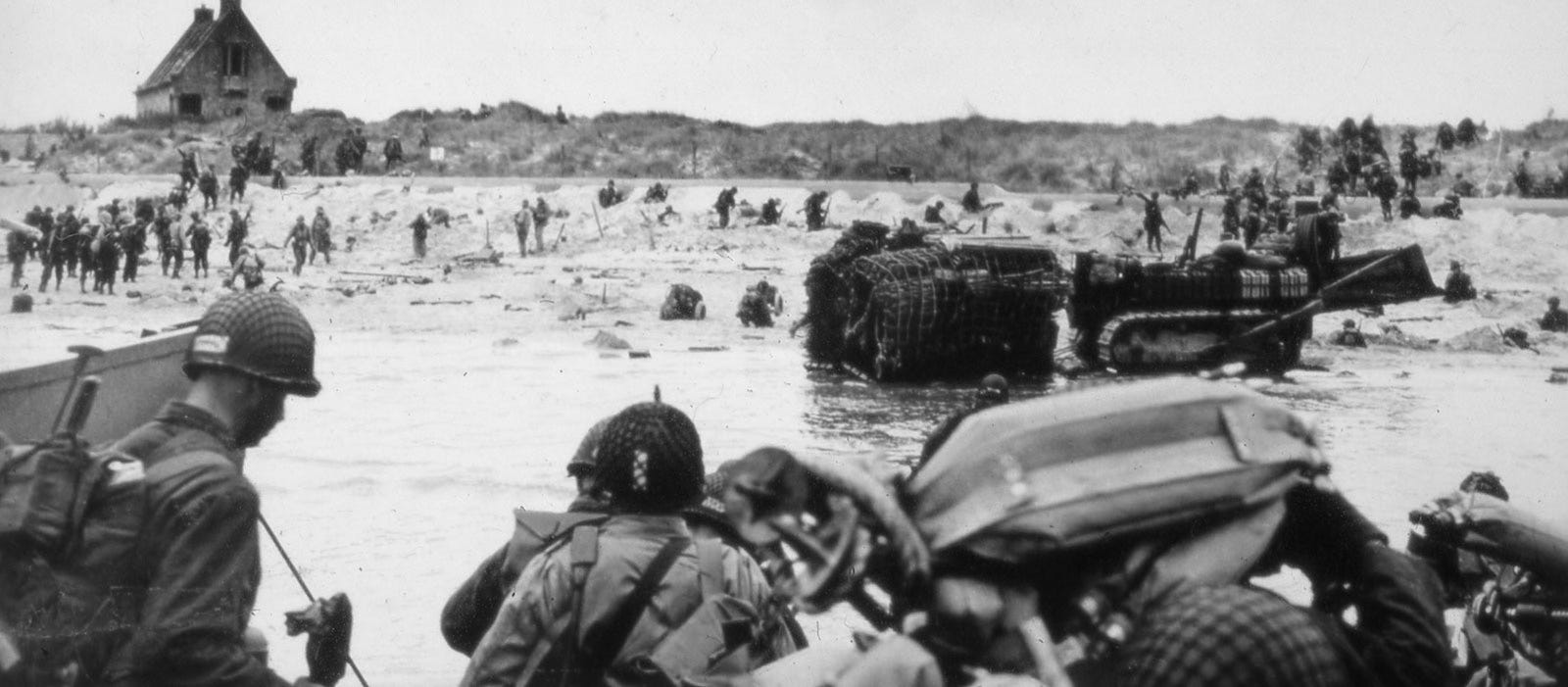
His initial wave landed in the wrong position — more than a mile from the beach they were supposed to hit. When he realized they were off target, General Roosevelt personally scouted the area, came back to his men, and famously declared, “We’ll start the war from right here!” At 56 years of age, with a heart condition that he had hidden from Army doctors, the general stormed that beach with a wooden cane in one hand and an M1911A1 pistol in the other.
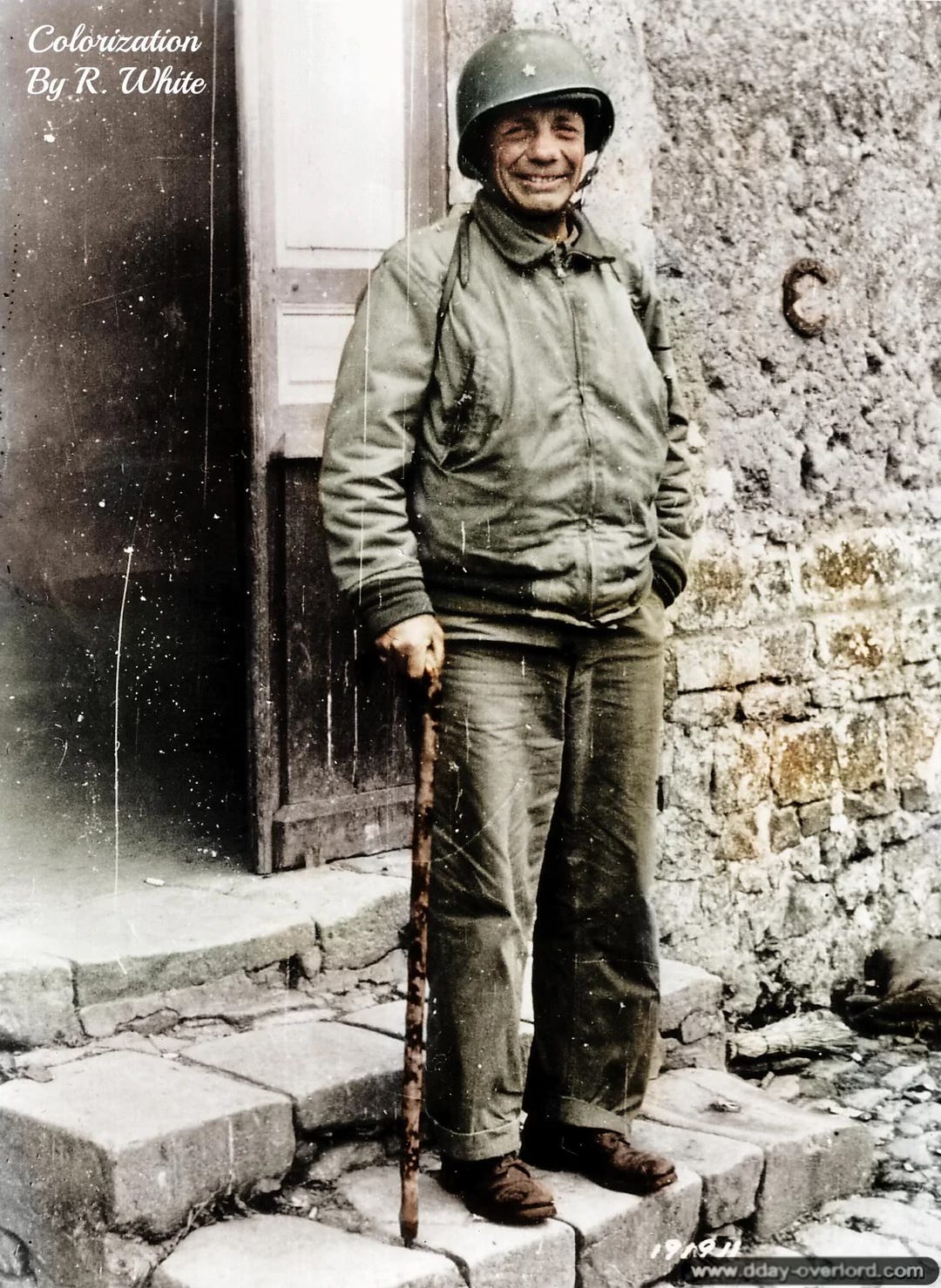
During the entire day, Roosevelt never took cover. As the beach was being shelled and swept with machine-gun fire, he walked up and down the beach rallying his soldiers, telling jokes, and using his cane to point out where he wanted them to go. He personally led multiple assaults on strongpoints and directed traffic off the beach. Because of his calm under fire, bravery, and leadership, Utah Beach became the most successful landing on D-Day. His units suffered fewer than 300 casualties and achieved most of their objectives for Day 1.
Thirty-six days later, on July 12, 1944, Roosevelt suffered a heart attack and died while still leading men in combat.
He was posthumously awarded the Medal of Honor.
General Theodore Roosevelt Jr. is buried at the Normandy American Cemetery and Memorial in Colleville-sur-Mer, France. He rests in the section with the soldiers of the 4th Infantry Division; alongside the men he led.
Duty, honor? Living up to the family name? A good day to remember the men who stood up when called upon.
Thank you for sharing. I wish our schools taught more of the greatness of the US and her military accomplishments.