


The Honor System Collapse: Why the Interstate Handgun Ruling Will Break State Gun Control
For nearly two decades the Supreme Court has been taking apart the scaffolding of twentieth-century gun control. Heller said the Second Amendment protects an individual right to keep a handgun for self-defense. McDonald applied that right against the states. Bruen threw out interest-balancing and told every court to measure a gun law against the Nation’s historical tradition of regulation. Rahimi drew a line around people who are actually dangerous. Wolford told states they cannot invent “sensitive places” on private property open to the public. Hemani said casual drug use does not turn a citizen into a prohibited person. Viramontes is still coming.
The pattern is not mysterious. Local hyper-restriction only works if someone else will enforce it at the border. That someone else just lost a round in the Fifth Circuit.
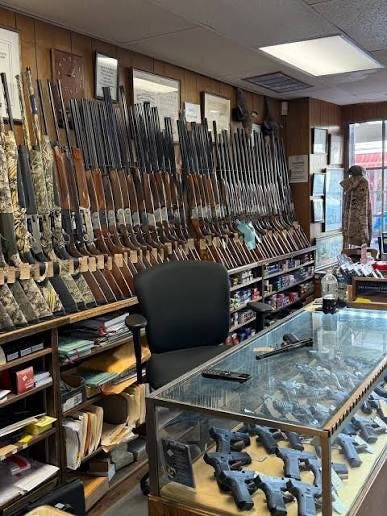
What the Fifth Circuit actually did
On September 18, 2026, in Elite Precision Customs L.L.C. v. BATFE, Judges Jerry Smith and Kurt Engelhardt held that the federal ban on direct interstate handgun sales violates the Second Amendment. Judge Catharina Haynes dissented.
The statutes are a cluster from the Gun Control Act of 1968. Section 922(b)(3) forbids a licensed dealer to sell a handgun directly to a resident of another state. Section 922(a)(3) forbids receiving in your home state a handgun purchased elsewhere. Section 922(a)(5) separately restricts most unlicensed person-to-person transfers across state lines. Congress already treated long guns differently. You may buy a rifle or shotgun in person from an out-of-state dealer. Handguns were the lock on the door.
Elite Precision is a Texas shop. Tim Herron lives in Arizona. Freddie Blish lives in New Mexico. Federal law told the Texas dealer it could not complete those counter sales. Firearms Policy Coalition joined them.
The Department of Justice put about eighteen old laws on the table. They came in three piles: wartime and common-defense rules, bans on selling arms to tribes or foreign sovereigns, and inspection or quality statutes for powder and muskets. None of that is a peacetime ban on a citizen of one American state buying a common handgun from a licensed dealer in another. The government’s other defense was the workaround. Ship the gun to a dealer in the buyer’s home state, pay a second fee, wait, and hope that dealer plays along. The court said a purchase ban does not become constitutional because the government will sell you a slower, more expensive door.
That holding binds Texas, Louisiana, and Mississippi. It splits with the Second Circuit’s 2025 decision in United States v. Vereen, which upheld the same basic scheme. It is not yet the law in Pennsylvania or New Jersey. ATF can still treat the 1968 rule as live outside the Fifth Circuit until another court or the Supreme Court says otherwise. The split is why this case is built for a petition.
Why 1968 built a border guard
Congress did not claim a Glock becomes immoral at a state line. It claimed restrictive states would be circumvented if a citizen could buy a handgun where the sale was legal. So it conscripted every federal licensee as a customs agent for the buyer’s legislature. For almost sixty years that federal deputization was the real enforcement mechanism. New Jersey did not have to watch the river. Pennsylvania was required to refuse the sale.
Take that conscription away and the local statute is still on the books. What disappears is the out-of-state shop forced to honor it.
The honor system was already the real regime
Murder is malum in se. People mostly do not do it because there is a victim. Crossing a state line to buy a tool is malum prohibitum. It is a crime because a statute says so. Flood the code with the second kind and you manufacture felons out of geography and paperwork. The citizen who sees no victim does not feel a moral duty. He feels a demand to obey.
Washington’s private-sale background-check rule is the small version of the same fact. On paper every kitchen-table transfer goes through an FFL. In the living room, with no registry, the state is asking for honesty. A lot of people have been giving it the amount of honesty such a rule usually gets.
The interstate handgun ban was the large version. It looked like law because a dealer in another state would catch you. Remove the dealer’s federal duty and the large version becomes the small one.
A right that stops at the state line

Imagine the federal government said you may exercise the First Amendment only in your state of residence. A Washingtonian who drove to Idaho to buy a Bible, a press, or a stack of pamphlets would have to prove local residency before the sale. Nobody would call that a modest paperwork rule. Everybody would call it a confinement of the right.
That is how the United States treated the right to acquire a handgun for half a century. The right traveled with the person in the text of the Constitution. The statute treated it as a privilege that dissolved at the border.
If the Supreme Court agrees with the Fifth Circuit, the live problem looks like this. A New Jersey resident walks into a Pennsylvania shop and buys a Sig Sauer P226. Pennsylvania sells that pistol with standard 15-round magazines. New Jersey makes possession of a magazine over ten rounds a felony and wraps handgun purchases in a permit scheme. Under the old federal rule the Pennsylvania dealer was New Jersey’s border guard. He could not make the sale. If Elite Precision becomes national law, his federal job ends when NICS clears. He still fills out a Form 4473. What he no longer does is hand the gun to a New Jersey FFL so Trenton gets an intercept. New Jersey is left to police the magazine when the car comes home. The buyer is left to decide whether he will walk back into a paperwork felony.
No one was assaulted. No property was taken. The felony is the river.
What restrictive states do next
They do not put a customs booth on I-80. They lack the jurisdiction and the cars.
They prosecute possession when they find it. They demand traces and dealer records from ATF. They ask for a stay. They write letters about “loopholes.” They cannot make a Texas or Pennsylvania licensee enforce a New Jersey permit they cannot see.
That is the collapse. Not every local statute vanishing in a week. The federal mechanism that made those statutes bite across a state line is what breaks. Inside the Fifth Circuit, it has already broken. If the Court takes Vereen and affirms, the honor system is all that is left.
A constitutional baseline stops being a theory at that point. It becomes the only enforcement model the map will support.
Observations from the Late Republic
#Observations #SecondAmendment #FourthBranch #ConstitutionalRights #LateRepublic
Further Reading
Elite Precision Customs L.L.C. v. BATFE, No. 25-11206 (5th Cir. Sept. 18, 2026)
Mance v. Sessions, 896 F.3d 699 (5th Cir. 2018) (the pre-Bruen decision this panel rejected)
New York State Rifle & Pistol Association v. Bruen, 597 U.S. 1 (2022)
Wolford v. Lopez, 146 S. Ct. 2032 (2026)
18 U.S.C. §§ 922(a)(3), (a)(5), (b)(3)
Hell yeah!