


Washington showed what virtuous leadership looked like. James Madison tried to design a system that did not depend on constantly finding another Washington.
While George Washington provided the living example of virtuous leadership and restraint, James Madison attempted something equally ambitious. He tried to design a system of government that could endure even when filled with ordinary, flawed human beings.
The Brilliant, Frail Architect
James Madison was in many ways an unlikely founder. Small in stature, frequently ill, and painfully shy in public, he lacked the physical presence and natural charisma of Washington or the magnetic charm of Jefferson. Yet few men in American history have thought more deeply about how governments succeed or fail.
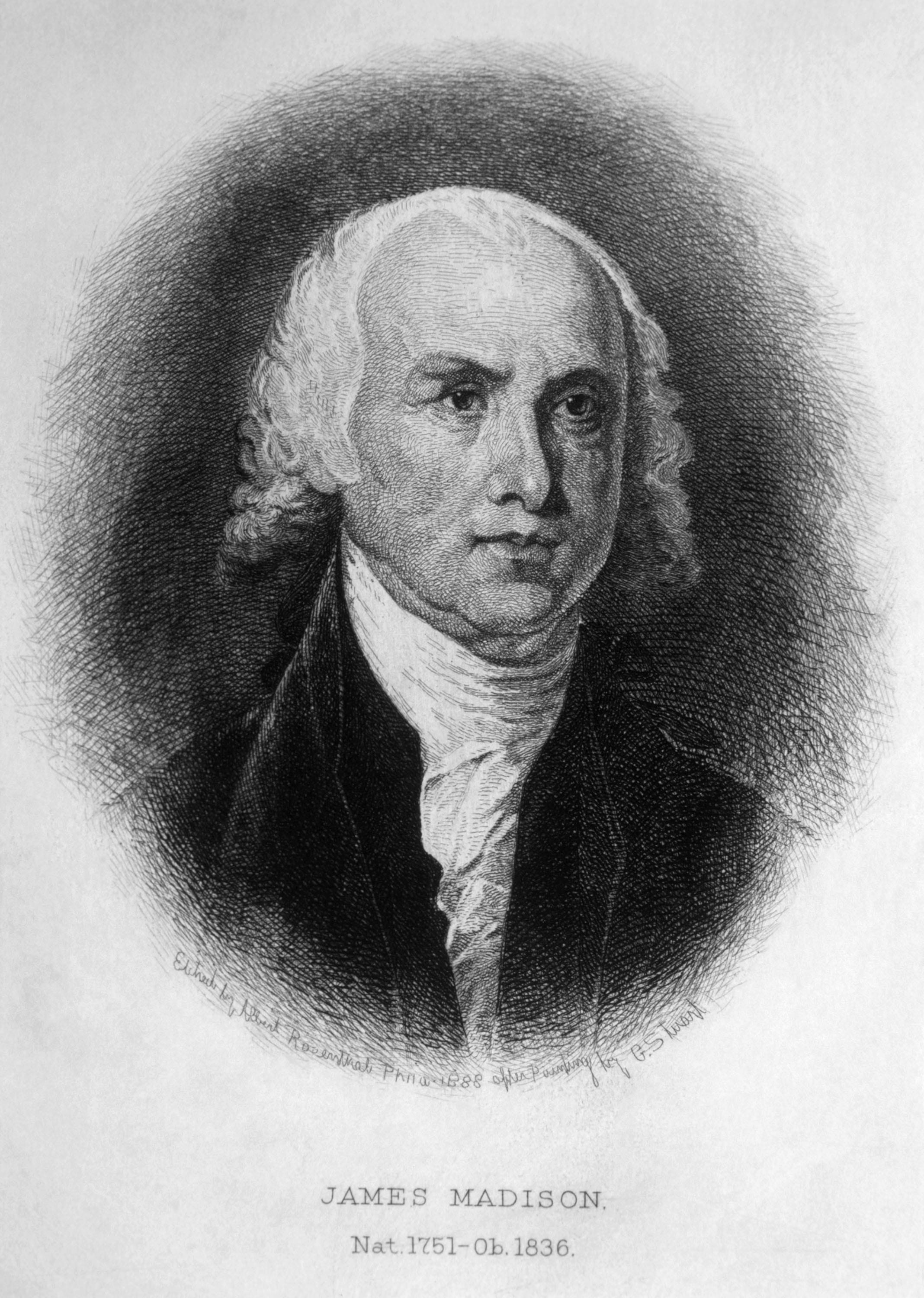
Several forces shaped the young Madison: an intense education at the College of New Jersey (later Princeton), deep study of classical history and Enlightenment thinkers, direct experience with the weak government under the Articles of Confederation, and a fierce commitment to religious liberty. By his early thirties, he had become one of the most knowledgeable and thoughtful political minds in America.
Learning from Rome
Madison drew heavily from the Roman Republic. He saw it as history’s greatest example of a mixed constitution. One that combined elements of monarchy (the consuls), aristocracy (the Senate), and democracy (the tribunes and popular assemblies). The consuls especially fascinated him: powerful executives who held near-kingly authority during their short term, yet were bound by law, time limits, and institutional checks.
But Madison was not merely copying Rome. He was designing something new and more formal for the American situation. Where Rome’s system had evolved organically and often blurred lines between institutions, Madison sought clear, deliberate boundaries. He created a much stronger and more explicit separation of powers, particularly by establishing an independent judiciary. This was something Rome never clearly formalized. And, in fact, the Senate often pulled the judiciary power back from the Praetors.
He also addressed the practical political reality of his time: the smaller states feared domination by the largest and richest one, Virginia. This fear helped produce the federal compromise of a strong national government balanced by powerful sovereign states and an upper house (the Senate) where every state had equal representation regardless of size.
Madison and the other Founders were not utopian dreamers. They were hard-headed realists who had studied history closely. They knew what men were really like: imperfect, greedy, short-sighted, ambitious, and often shallow. They had studied the fall of Rome, the tyranny of King John, Cromwell’s military dictatorship, and countless other examples of republics collapsing into chaos or despotism. They designed the Constitution for fallen men, not for angels.
The Science of Republics
Madison’s most important intellectual contributions came in the Federalist Papers, particularly Federalist 10 and Federalist 51.
In Federalist 10, he tackled what had destroyed so many previous republics: factions. He rejected the idea that factions could be eliminated in a free society. Men would always form groups based on differences in property, religion, ideology, and ambition. The solution, Madison argued, was not to suppress factions, but to control their effects. A large republic with many diverse interests would make it harder for any single faction to dominate the whole.
In Federalist 51, Madison laid out the mechanical genius of the Constitution. “Ambition must be made to counteract ambition,” he wrote. By dividing government into separate branches and giving each the means and motive to resist the others, the system would use human nature, rather than fight against it, to protect liberty.
Madison was not hoping for virtuous leaders in every generation. He was building a machine that could function even when filled with ordinary, self-interested men.
A System Built for Imperfect Men
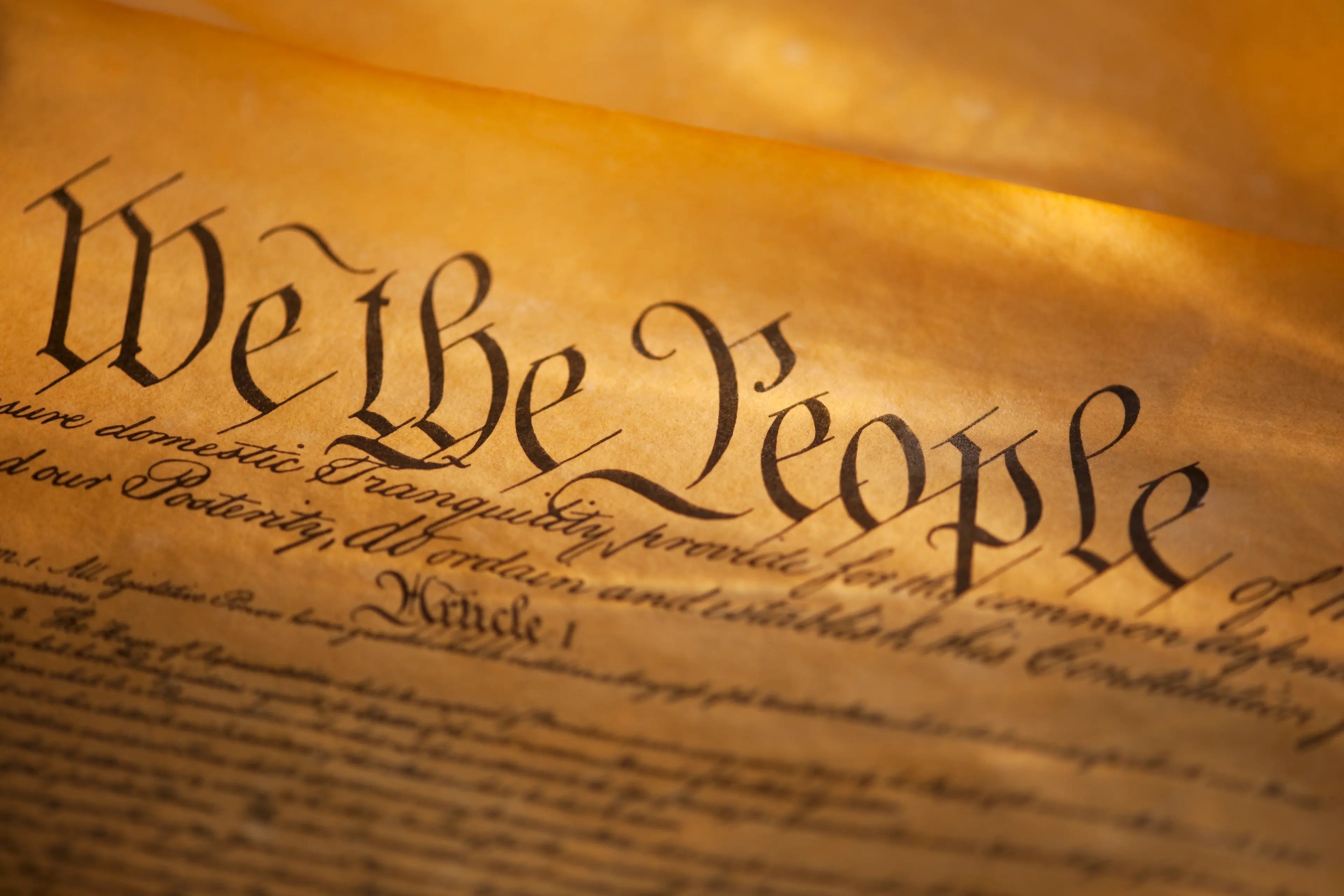
Madison’s greatest achievement was designing a system that could survive leaders who lacked virtue. The Republic has endured presidents of wildly varying quality, including men like Woodrow Wilson and Warren G. Harding, who were far from exemplars of personal or moral excellence. That the country survived and even thrived under such leadership is powerful evidence that Madison’s machinery worked as intended.
Madison worried in later years about the rise of political parties and the slow concentration of power. He understood that no system is eternal. It still requires vigilance.
Conclusion
In our own time of Late Republic strain, Madison’s realism about human nature may be one of the most relevant lessons the Founders left us. He did not design the Constitution for angels. He designed it for men as they actually are: imperfect, ambitious, and often shortsighted.
The Constitution was deliberately built to resist rapid change. This frustrates people when they want the government to do something quickly, but they should be glad it is hard to change things, not upset. Rapid, sweeping change in government has historically been associated with revolution, tyranny, and collapse. Madison and the other Founders understood this danger well.
The remarkable endurance of the American Republic for two and a half centuries is a testament to the strength of that design. But Madison would be the first to warn us that no constitution is self-sustaining forever. The machinery still requires vigilant citizens willing to defend its principles and its boundaries.
#America250 #Founders
Further Reading
If you want to dig deeper into James Madison and the intellectual foundations of the American Republic, these works are excellent:
The Federalist Papers by Alexander Hamilton, James Madison, and John Jay — Essential primary source. Focus especially on Federalist 10 and Federalist 51.
James Madison: A Biography by Ralph Ketcham — The best single-volume biography. Balanced and deeply researched.
The Last of the Fathers: James Madison and the Republican Legacy by Drew R. McCoy — Excellent on Madison’s later years and his growing concerns about the direction of the Republic.
Founding Brothers by Joseph J. Ellis — Very readable look at the relationships and conflicts among the Founders, with strong sections on Madison.
The Quartet by Joseph J. Ellis — Focuses on the four key men (Washington, Madison, Hamilton, Jay) who drove the creation of the Constitution.
Original Meanings by Jack N. Rakove — Outstanding scholarly work on how the Founders understood the Constitution they created.