


Two hundred and fifty years ago, a small group of men in Philadelphia declared something the world had never truly seen before: that all men are created equal, and that governments derive their power from the consent of the governed.
In all of human history up to the summer of 1776, one assumption undergirded nearly every culture, government, education system, and social norm: humans are not equal.
From the dawn of civilization, hierarchies were the iron law of existence. Pharaohs and emperors ruled as living gods. Kings claimed divine right, their authority descending directly from heaven itself, a doctrine that made resistance to the ruler tantamount to rebellion against God. Slavery was ubiquitous across all cultures, societies, and kingdoms. Indentured servitude was common, and vast populations lived under the heel of monarchs, aristocracies, or warrior elites everywhere. Even in the celebrated ancient experiments with broader rule, such as Athens’ democracy or the Roman Republic, equality was strictly limited. Athenian “citizens” were a tiny fraction of the population; women, slaves, and foreigners had no voice. Rome had its Senate and popular assemblies, but power flowed through patrician families, and the system rested on conquest, clientage, and rigid class distinctions.
Rule by the strongest, the best-born, or the divinely anointed was simply how the world worked. The strong dominated the weak. Birth determined destiny. The idea that ordinary men possessed natural rights that no king or parliament could legitimately violate was almost unthinkable. A very small group of men had said such things—the Enlightenment philosophers—but they had been mostly ignored by the powers that be.
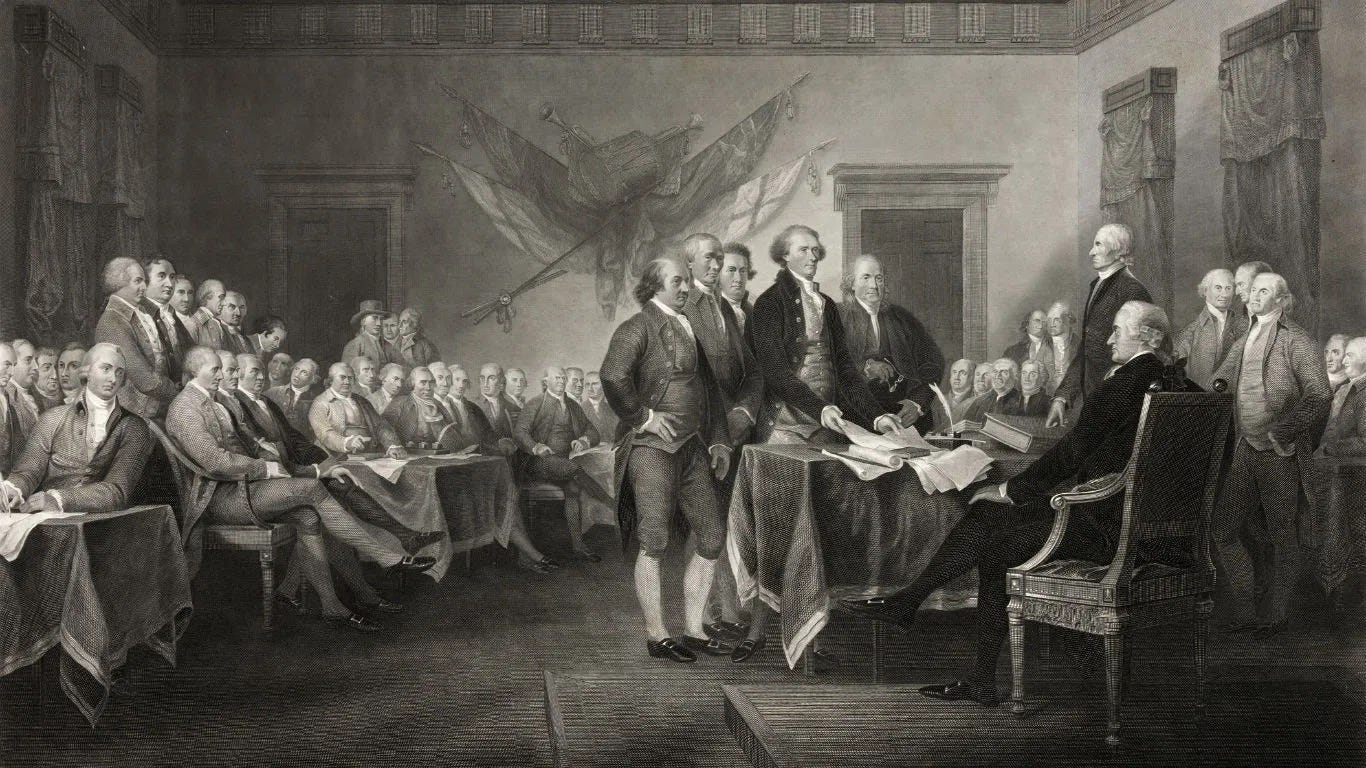
Then, on July 4, 1776, a small group of men in Philadelphia declared something audacious. It was something that had never truly been asserted at the founding of a nation before.
They wrote a document that shook the world to its very foundations: the Declaration of Independence. They declared that all men are created equal, endowed by their Creator with unalienable rights to life, liberty, and the pursuit of happiness, and that governments derive their just powers from the consent of the governed.
Section 1: What They Actually Said
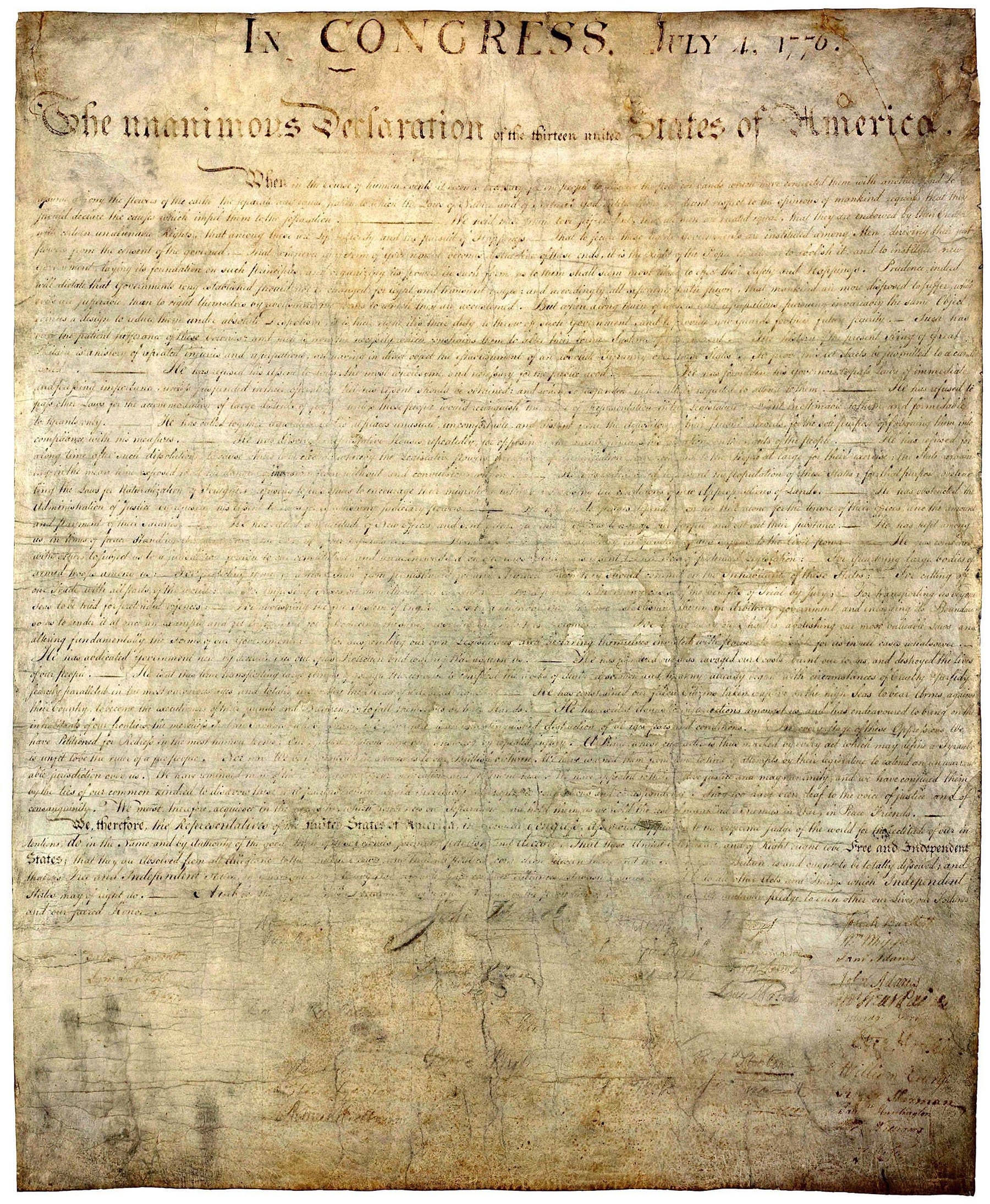
The Declaration is a masterpiece of Enlightenment reasoning wrapped in moral fire. Jefferson’s famous preamble distills ideas drawn from John Locke and the broader natural rights tradition. The philosophical foundation was clear: rights come from Nature’s God, not from kings or majorities. Governments exist to secure those rights, and when they become destructive of them, “it is the Right of the People to alter or to abolish” that government.
This was explosive in 1776. The second part is not a petty rant. The long list of grievances against King George III was real, and he was a tyrant. It is a moral indictment, showing a “long train of abuses and usurpations” designed to establish “absolute Despotism.” From dissolving legislatures to quartering troops to cutting off trade, the signers laid out how the King had broken the implicit contract.
Section 2: The Real Risk
These were not demagogues with armies at their backs. Many were lawyers, merchants, planters—men with everything to lose if King George won. They pledged their “Lives, Fortunes, and sacred Honor.”
And many paid dearly: homes burned, families harassed, businesses ruined, imprisonment, and in some cases death. Five signers were captured and tortured. Others lost sons in battle or saw their wealth evaporate in support of the cause.
They signed anyway. In an age of kings and empires, they bet on an uncertain war and an even more uncertain experiment in self-government. They bet their lives against the most powerful empire on Earth.
Section 3: The Universal Idea
What made the Declaration truly world-changing was its appeal beyond America. It became a template and inspiration for independence movements and reformers globally. The language of natural rights and consent planted seeds for the abolition of slavery, women’s suffrage, and the spread of self-government.
The monarchies of Europe recognized the danger immediately. The American experiment was not just a colonial rebellion. It was an ideological virus. If colonists could successfully assert that governments derive their power from the consent of the governed and that people had the right to dissolve tyrannical rule, what was to stop the same ideas from spreading to France, Spain, Austria, or Russia? The success of the American Revolution sent shockwaves through the courts of Europe.
Those fears were dramatically confirmed by the French Revolution. What began with similar rhetoric inspired by America quickly radicalized into the Terror, regicide, and a continental war. The crowned heads of Europe united in coalitions against the French Republic precisely because they understood the threat: once the principle of popular sovereignty took root, no throne was truly safe.
The tension is real: the men who signed the Declaration were themselves having to grow into the radical implications of their own words. They were products of a world built on hierarchy, and 1776 thrust them into uncharted territory. Some, like Nathaniel Greene, actively worked to live out the principles more fully. Others managed only partial steps or struggled to reconcile the ideal with the realities they knew. Thomas Jefferson, the great philosopher that created this truly radical document, is perhaps the most obvious example.
But the power of the idea they had unleashed proved stronger than the limitations of their time. Over the generations that followed, Americans (and people around the world) used the Declaration’s own words as a measuring stick to demand fuller realization of those principles.
Section 4: The Deeper Meaning for Today
Two hundred and fifty years later, in what feels like a Late Republic moment of division, institutional distrust, and concentrated power, the Declaration remains our North Star.
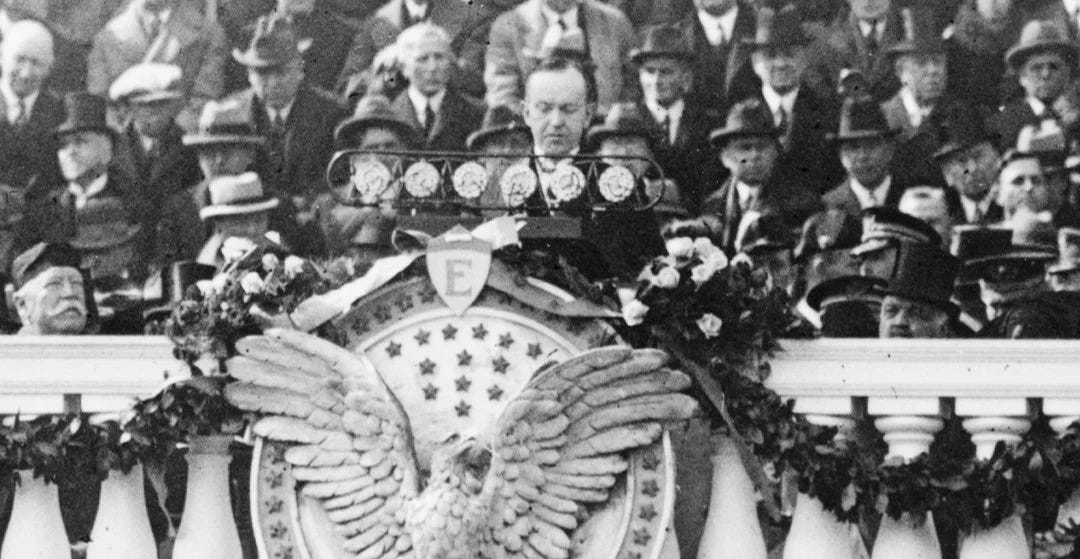
Calvin Coolidge expressed this powerfully on the 150th anniversary of the Declaration in 1926. He argued that the Declaration was not the beginning of political wisdom, but in many ways its culmination. He told us that it is the clearest statement of principles toward which mankind had been striving for centuries. If all men are created equal, then there is nowhere further we need to go in terms of first principles. The task is not to transcend or “evolve beyond” the Declaration, but to live up to it.
It is not a guarantee that we will always get it right. It is a perpetual challenge: Do we still believe that governments derive their just powers from the consent of the governed? Are we willing to defend the principles of liberty and equality under law, or will we trade them for security, comfort, or partisan victory?
The document that launched the American Revolution is revolutionary, and remains revolutionary, precisely because it calls us back to these permanent truths rather than into new experiments in human engineering.
Conclusion
From Washington’s refusal to be king, to Madison’s constitutional machinery built for flawed men, to the quiet reverence of families walking through the Bicentennial Train in 1976, the America 250 series has been a reminder of what we inherited and what makes this nation truly extraordinary in the world.
On this 250th anniversary, as fireworks light up beaches and skies across the country, including here on the beach in Ocean Shores, Washington, let us recommit not just to celebration, but to vigilance. The Republic is not self-sustaining. It requires citizens who remember the radical promise of 1776 and who are willing to pledge something of their own lives, fortunes, and sacred honor to keep it.
The Declaration was not the end of the story. It was the beginning. The question for us, 250 years on, is whether we still possess the Spirit of 1776. Do we have the courage to be as radical in our defense of these truths as our Founders were in declaring them?
Further Reading
The Declaration of Independence — Read it slowly. It rewards careful attention every single time.
The Federalist Papers (especially Nos. 10 and 51) by Madison, Hamilton, and Jay.
The Ideological Origins of the American Revolution by Bernard Bailyn — One of the finest books on the intellectual world that made 1776 possible.
The Radicalism of the American Revolution by Gordon S. Wood — A powerful exploration of just how revolutionary the American founding truly was.
American Scripture: Making the Declaration of Independence by Pauline Maier — Excellent on the drafting, context, and immediate impact of the document.
Calvin Coolidge’s speech: The Inspiration of the Declaration, on the 150th Anniversary (July 5, 1926) — Short, eloquent, and deeply insightful.
America 250: A Series Celebrating America
#America250 #AmericanHistory #Founders