


Preheader:
Washington was not a military genius. He lost far more battles than he won. His true greatness lay in something much rarer: character, endurance, and the repeated, deliberate choice to surrender power.
George Washington: The Indispensable Man
The popular image of George Washington as a brilliant military genius who outfought the greatest empire on earth is largely myth. Washington was neither a Caesar nor a Napoleon. He lacked their ruthless hunger for personal power and their operational military genius. What made him extraordinary was something far rarer in history. He repeatedly took power when his country desperately needed him, exercised it with restraint, and then willingly gave it up.
In this, he consciously modeled himself after the Roman hero Cincinnatus. According to legend, Cincinnatus was a farmer who was appointed dictator by the Senate during a grave emergency. He defeated Rome’s enemies in just sixteen days, then immediately resigned his dictatorship and returned to his plow. The American Founders so deeply admired this ideal of the citizen who serves only as long as necessary and then returns to private life that they later named the city of Cincinnati, Ohio after him.
Washington came closer to living that ideal than any other successful revolutionary leader in history.
The Forging of Character Through Failure
George Washington was not born great. He was born ambitious and determined in a world that gave him neither wealth nor high social standing.
As a younger son in a respectable but modest Virginia family, Washington had to make his own way. He began his adult life as a surveyor on the dangerous frontier. He was good at it, but it was not enough. He craved military glory and the respect that came with it.
The French & Indian War gave him his opportunity, and it nearly ruined him.
In 1754, at only twenty-two years old, Washington led an inexperienced force into the Ohio Country. He stumbled into a skirmish with French troops. He surrendered at a small stockade called Fort Necessity, and signed humiliating terms the French later used as propaganda. A year later, serving under British General Edward Braddock, he survived a catastrophic ambush along the Monongahela River. Two horses were shot from under him and four bullets passed through his coat. Yet Washington remained strangely untouched amid the slaughter. Like Napoleon and Patton after him, he seemed to have an almost supernatural ability to stand in the fiercest fighting and emerge unscathed. This episode marked the beginning of his reputation for exceptional courage under fire.
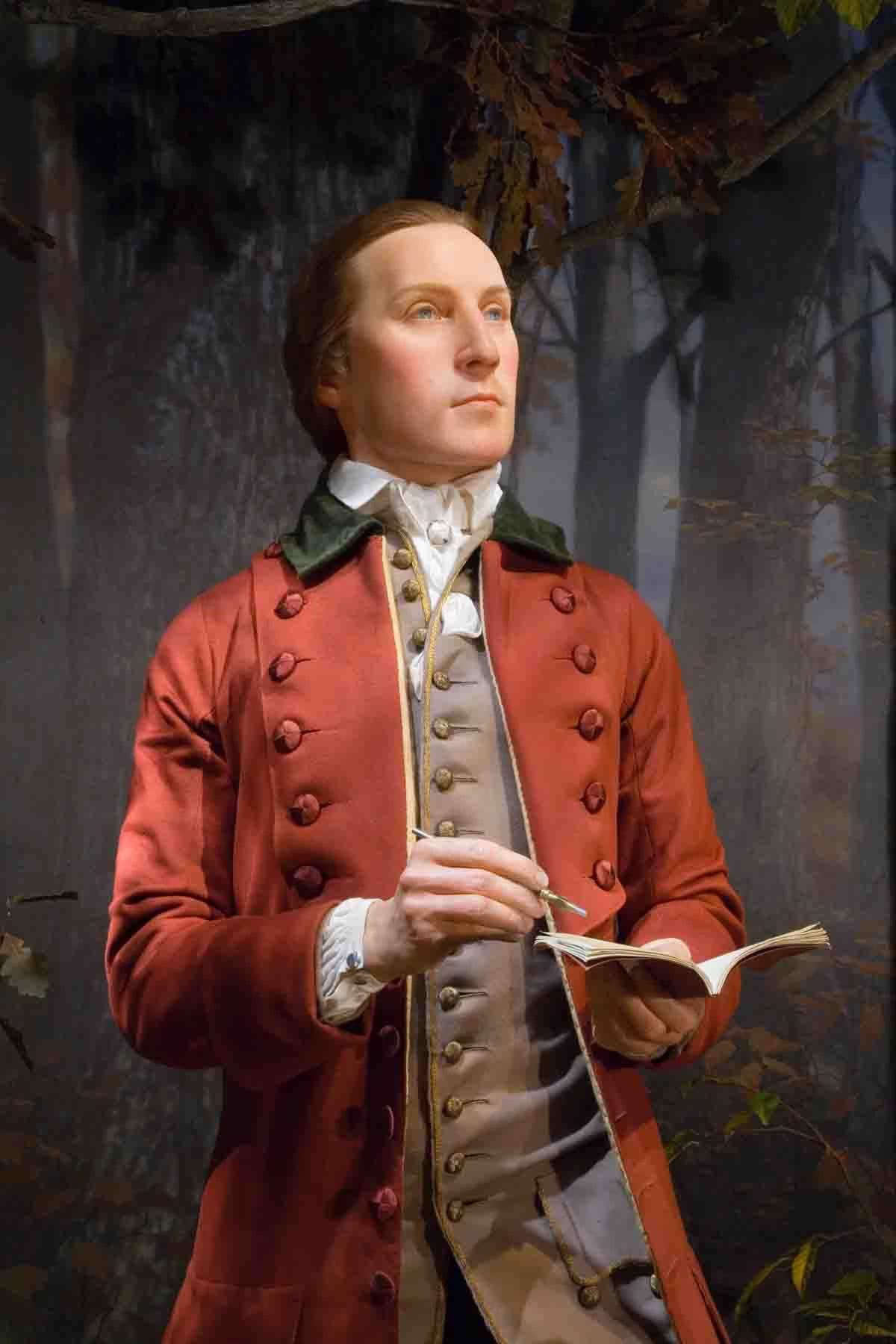
These early disasters taught the proud, hot-tempered young Washington hard lessons about overconfidence, logistics, and his own limitations. He began the long work of mastering himself, controlling his temper and building a reputation for honesty and reliability.
It was during this difficult time that Washington discovered the story of Cincinnatus. This ancient example became one of the guiding stars of his life.
By the time the American Revolution began more than twenty years later, Washington was no tactical genius. But he had become something much rarer: a man forged by failure who possessed the self-mastery his country would desperately need.
Interwar Years: The Making of a Virginia Gentleman
In the years between the end of the French & Indian War and the beginning of the American Revolution, Washington transformed himself from an ambitious young officer into one of the most respected men in Virginia. He returned to Mount Vernon, married the wealthy widow Martha Custis in 1759, and became a successful planter and businessman. He served in the Virginia House of Burgesses and slowly built the reputation of a solid, reliable member of the colonial gentry.
Yet he watched with increasing alarm as Britain imposed new taxes and regulations on the colonies. By 1774, Washington had emerged as a leading voice of resistance in Virginia. When the colonies needed a commander, they chose him.
The Revolutionary War — Endurance, Not Genius
In June 1775, Washington arrived at the Second Continental Congress in Philadelphia wearing his Virginia militia uniform. Two days later, he was unanimously chosen as Commander-in-Chief. He was not chosen because he was the best battlefield tactician. Several officers, most notably Benedict Arnold, were widely regarded as more brilliant in combat.
The war that followed proved the wisdom of that choice.
Washington lost far more battles than he won. He was repeatedly outmaneuvered by better-trained British generals. The army suffered devastating defeats in New York, desperate retreats across New Jersey, and brutal winters at Valley Forge and Morristown. Supply shortages, short enlistments, disease, and political interference constantly threatened to dissolve the force.
Yet Washington proved himself a brilliant leader of men. His soldiers developed a deep, personal loyalty to him. As a combat veteran myself, I can tell you that generals who willingly go where the fighting is fiercest, and somehow emerge unscathed, earn a special kind of respect from the rank and file. Washington had that quality in abundance. His men respected his courage, his willingness to share their hardships, and his quiet competence. Even in defeat, his mere presence often steadied the troops.
Washington’s real military achievement was not tactical genius, but strategic endurance. While battlefield commanders like Benedict Arnold were superior in combat, Washington understood that keeping the army alive was the true requirement for victory. Arnold’s later treason, driven largely by resentment at being passed over for promotion, only highlighted why the Continental Congress had chosen character and steadiness over raw tactical talent.
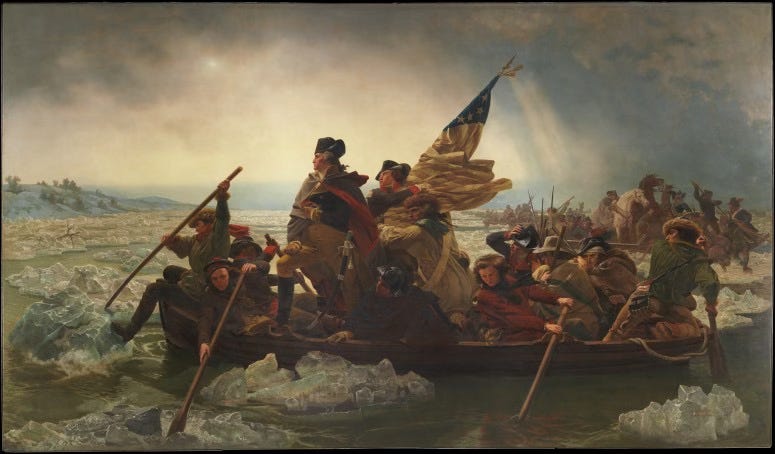
His one clear flash of operational brilliance came on Christmas night 1776, with the surprise crossing of the Delaware and the victory at Trenton. It was a brilliant tactical stroke, aided by luck, terrible weather, and British complacency. But Trenton was the exception, not the rule. By Yorktown, Washington had won the war. But he had done so by surviving, not by battlefield genius.
The ultimate test came during the winter of 1782–83 at Newburgh, after Washington had actually won the military campaigns and Cornwallis had surrendered at Yorktown. Unpaid and angry officers threatened rebellion against Congress. Some urged Washington to seize power or accept a crown. In one of the most dramatic moments of the war, Washington confronted the officers, shamed their disloyalty, and reaffirmed civilian control. Once again, he chose the Republic over personal power.
By 1783, Washington had done what almost no successful revolutionary general in history had managed. He kept the cause alive through eight brutal years and won the war without becoming a tyrant.
The Reluctant President
In 1787, Washington presided over the Constitutional Convention. His presence gave the proceedings crucial legitimacy. Without Washington, it is likely the Constitutional Convention would have failed to create a new government to succeed the original Articles of Confederation. When the new government was formed, he was the only man the country could imagine as its first President. Once again, he answered the call despite his deep desire to remain at Mount Vernon.
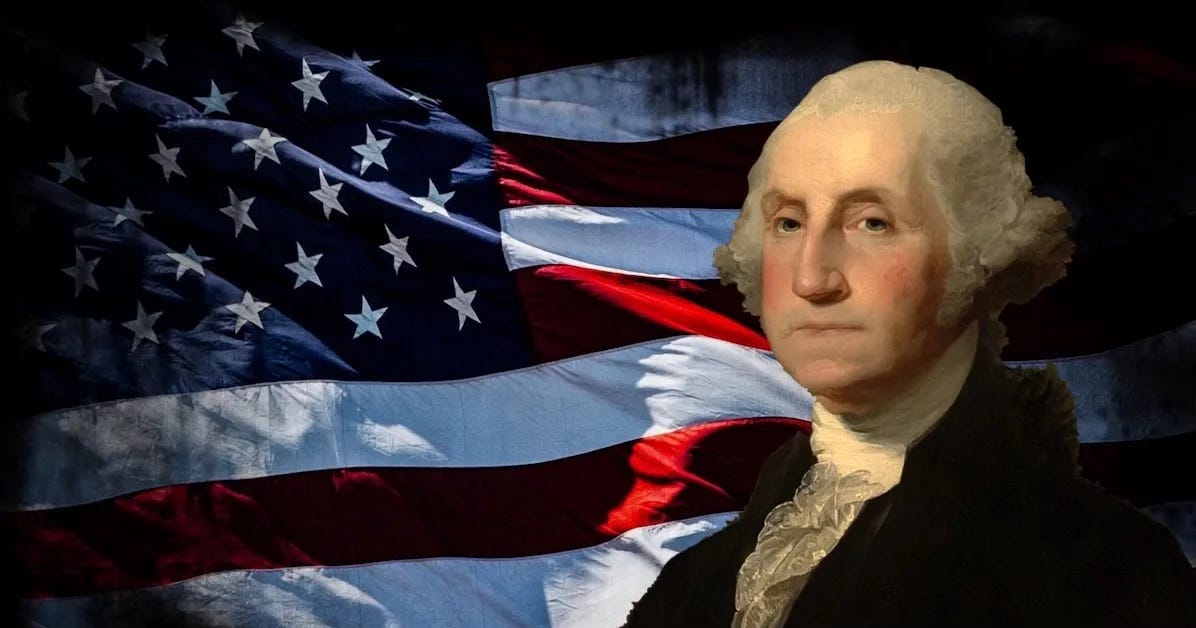
As President, he set enduring precedents: the cabinet system, civilian control of the military, and neutrality in foreign affairs. His handling of the Whiskey Rebellion in 1794 was especially telling. Rather than ignore the unrest or use it as an excuse to expand federal power permanently, he personally led a militia force to restore order, then pardoned the leaders and stood the army down once the crisis passed.
The Final Refusal
After two terms as President, George Washington did what almost no successful revolutionary leader in history has ever done. He walked away from power.
In his Farewell Address, he warned the young nation about the dangers of permanent political parties, foreign entanglements, and excessive debt. Then he returned to Mount Vernon, not as a king and not as a permanent elder statesman, but simply as a private citizen.
Like the Roman Emperor Diocletian centuries before him, who shocked the world by voluntarily abdicating the throne and retiring to grow cabbages, Washington chose to step completely out of public affairs. He knew the story of Diocletian well. He understood that one of the greatest threats to a republic is the man who cannot bring himself to leave the stage.
This final act of relinquishing power may have been his greatest gift to the Republic.
Washington understood something that very few men who taste supreme power ever grasp. Republics die when their leaders refuse to let go. By choosing to be Cincinnatus rather than Caesar or Napoleon, he set a precedent that helped the American experiment survive its fragile early years.
He was not a tactical genius. He lost far more battles than he won. But he kept the Revolution alive when it could easily have died. He led men who loved and trusted him through unimaginable hardship. And, most importantly, he repeatedly refused to become the thing that has destroyed so many republics: the indispensable man who refuses to step aside.
In our own time of Late Republic decay, marked by career politicians, permanent bureaucracies, and leaders who cling to power at all costs, Washington’s example stands in sharp and humbling contrast.
#America250 #Founders
Beautiful, concise description of what made Washington such a great man. A case of divine providence if ever there was.
Happy Father's Day!