

Why this is the single most important skill you can have as a Modern Minuteman
Imagine you are driving down the highway and the car in front of you suddenly loses control. It flips and slides into the median. You pull over, run up, and find the driver unconscious with a deep gash on his leg that is pumping bright red blood.
In that moment, having a pistol on your hip does nothing to help. What matters is whether you know how to stop the bleeding before that person dies in front of you.
This is not a rare situation. Car accidents, serious falls, heart attacks, and workplace injuries happen every single day. Most of us will face at least one real medical emergency in our lifetime where we are the first person on scene.
Yet when people talk about being a Modern Minuteman, the conversation almost always jumps straight to guns. That is a mistake. Medical capability is the single most important skill you can have. It protects your family, your friends, and your community far more often than your firearm ever will.
Section 1: Why Medical Comes First
You are far more likely to need medical skills than your firearm in everyday life. While this is anecdotal, my personal experience is that I have given first aid in emergency situations well over a dozen times. But I have not once had to use my personal firearm in an emergency situation in civilian life.
Most violent encounters are over in seconds. Trauma from car accidents, slips and falls, heart attacks, and other medical events happens constantly. These situations do not wait for professional help to arrive. In the first critical minutes, you are the help.
Even if you carry a gun every day, you cannot shoot your way out of a heart attack, a car wreck, or someone choking on a piece of steak at the table next to you. A firearm does not fix those problems. Quick, competent medical intervention does.
This is why medical training is the foundation of being a Modern Minuteman. It is the skill that matters most when real life happens. Guns are important, but they are not the first tool you will reach for on an average bad day.
Section 2: Real-World Context
Common situations where medical skills are needed happen far more often than most people realize. Car accidents top the list. A driver loses control, a tire blows out, or someone rear-ends another vehicle. You arrive and find people with serious bleeding, broken bones, or trouble breathing.
Workplace injuries, slips and falls, heart attacks, and natural disasters create similar emergencies. These events do not wait for an ambulance. In those first critical minutes, you are the help.
Section 3: Core Philosophy
The simple, memorable framework is this: Stop the bleeding, keep them breathing, and get them to help. In the earliest stages of first aid in basic training, we learned the ABCs followed by how to stop the bleeding. ABC stands for Airway, Breathing, and Circulation. The first thing you do when you encounter an injured person or medical emergency is make sure the airway, breathing, and circulation are okay. If they are not, then CPR is the next step. If they are okay, then you move on to evaluate the injury and stop the bleeding.
The philosophy of emergency medical care is to quickly determine the emergency and apply basic, life saving steps. CPR, clearing the airway, and stopping the bleeding are 90% likely the things that must be done.
One of my closest friends in the military died while we were playing basketball on a Saturday morning. He was only 33 years old. He had a massive heart attack from an undetected heart problem. I gave him CPR. It did not save him, but at least I knew what to do and I applied the techniques I had been taught. I still think about how awful it would have been if I did not know what to do and just stood there watching.
That experience taught me something important. These skills are not abstract. They are real. They matter when someone you care about is suddenly fighting for their life.
This is not about being a doctor. It is about buying time until professional care arrives. This philosophy is at the heart of being a Modern Minuteman.
Section 4: Recommended Training Progression
Building real medical capability does not happen overnight. It takes a logical progression from basic skills to more advanced ones. The good news is that you can start making meaningful progress very quickly.
Begin with the Stop the Bleed course. This is a short, two to three hour class offered by the American Red Cross and many other organizations. It teaches you how to recognize life-threatening bleeding and how to use tourniquets and pressure dressings effectively. It is the best starting point for most people.
After that, move on to TCCC or TECC training. These courses build on Stop the Bleed and teach you how to handle more complex trauma situations, including airway management, chest seals, and treating injuries under stress.
If you want to go further, look for advanced scenario-based courses. The key is to start simple and build steadily. Do not try to jump straight to advanced training. Most people get overwhelmed and quit.
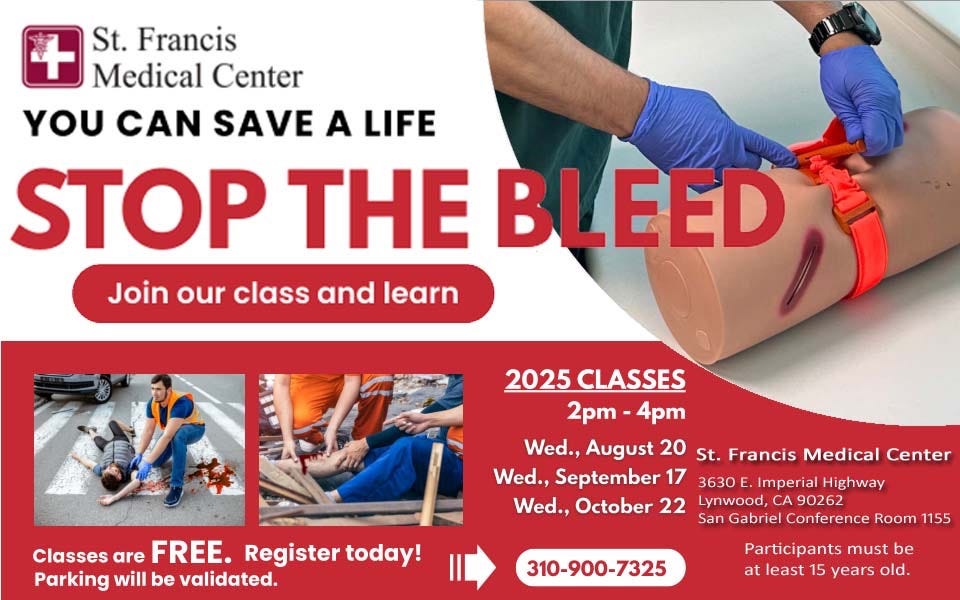
The important thing is to begin. Even basic training and a simple IFAK will put you far ahead of most people. Knowing how to apply a bandage and pressure to an injury is a huge step above the average person. You can learn how to use a pressure dressing such as an Israeli bandage in just a couple hours. Every step you take increases your ability to protect the people around you when something bad happens.
Section 5: Equipment Recommendations
Once you have basic training, the next step is putting together a simple but effective Individual First Aid Kit, or IFAK.
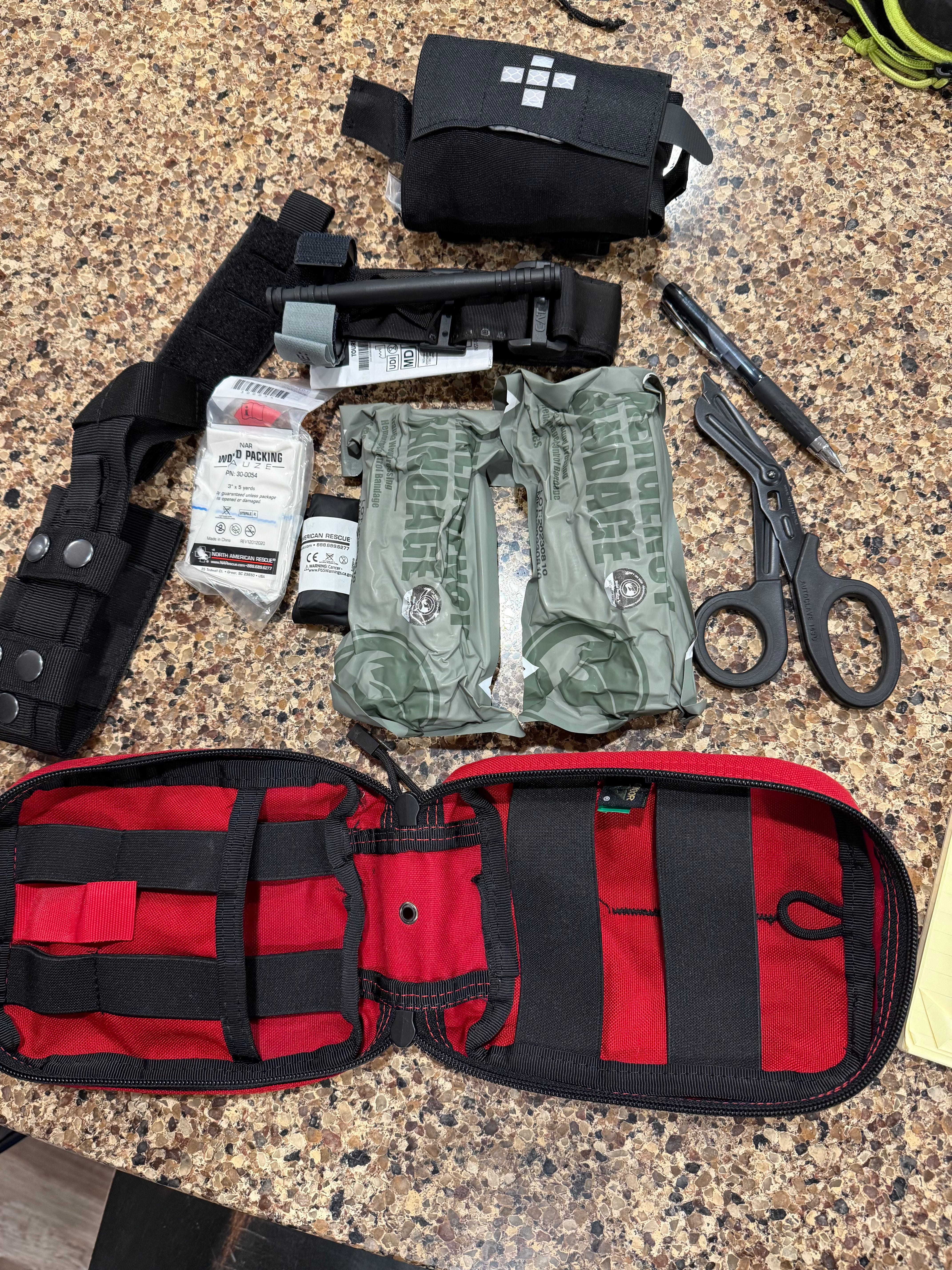
My standard full trauma kit is the Tacticon IFAK v1. It contains gauze, gloves, bandages, and a tourniquet in a compact package about the size of a five-year-old’s Nerf football. I add a NAR CAT tourniquet and trauma shears in a tourniquet holster, along with a black Sharpie and an Israeli bandage. The whole setup fits in a Condor EMT pouch. I keep one in each car, one in my range bag, two in the house, and the sixth version in my daily carry rucksack.
Focus on these core components in your own kit:
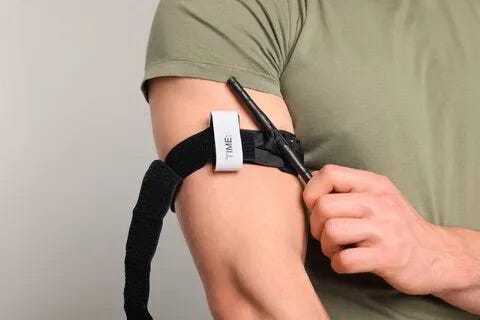
A good tourniquet such as the North American Rescue CAT. It is reliable, easy to apply with one hand, and comes with very easy to follow instructions. Keep those instructions attached to the CAT.
Pressure bandages. Israeli bandages or similar commercial pressure dressings are excellent. You can also create chest seals using the pressure bandage package. This is a standard training and tested approach in Army first aid courses.
Hemostatic gauze to help control bleeding that a tourniquet cannot reach.
Trauma shears to cut clothing quickly.
Gloves to protect yourself from blood.
Medical tape.
A permanent marker to write the time a tourniquet was applied.
You can buy pre-made kits from reputable companies like North American Rescue or Tacticon. Both were founded by military and first responder veterans with real experience in trauma care. Or you can build your own. The important thing is that the items are high quality and you know how to use them.
Keep the kit small enough that you will actually carry it. Place kits in multiple locations. One on your body for everyday carry, one in your vehicle, and one in your home. This way you are never far from the tools you need.
Section 6: Training Mindset
Having the right gear and knowing the basic skills is only part of the equation. The mental side matters just as much.
Treating family or friends is often harder than treating strangers. Emotion can cloud your thinking. Preparing for that reality is important. Simple scenario training helps. The more you practice under mild stress, the better you will perform when it counts.
In the Army we trained on first aid regularly. We tested our skills regularly. And regularly meant something on the order of every month we did some sort of practice, training, or testing. That is just how important it is considered in the military.
Remember that you do not have to be perfect. You only have to be good enough to buy time until professional help arrives. Most people freeze not because they lack knowledge, but because they have never practiced. Regular, simple training builds confidence and reduces hesitation.
The goal is not to become a paramedic. The goal is to be the person who can act effectively when seconds matter.
Section 7: Realistic Scenarios and Decision-Making
Real training should include scenarios. Here are a few simple but realistic examples you can practice.
You are at a family cookout. Someone trips and falls onto a grill, suffering deep burns and bleeding. What do you do first?
You are driving on a rural road at night. A car has gone off the road and hit a tree. The driver has a large laceration on his leg that is bleeding heavily. You have your IFAK.
You are at home when your spouse suddenly collapses and stops breathing.
These scenarios show how quickly decisions must be made. You do not have time to Google what to do. You must take action with the knowledge and tools you already have. I learned this the hard way when my closest friend had a massive heart attack while we were playing basketball. There was no time to think or hesitate. I had to act immediately using the skills I had been taught.
Practicing these kinds of situations builds the muscle memory and confidence needed to perform under real stress. Having the right gear and basic training gives you the ability to do something instead of standing there helpless.
Closing
Medical capability is the true foundation of being a Modern Minuteman. It is the skill that matters most in the emergencies you are actually likely to face. Guns are important. Fitness is important. But if you cannot stop someone from bleeding out or keep them breathing until help arrives, the rest of your training has limited value.
Take one concrete step this week. Sign up for a Stop the Bleed class. Build a basic IFAK and put it in your car or range bag. Practice applying a tourniquet or pressure bandage until you can do it smoothly under time pressure.
A good trauma kit like the one I described costs about $100 at most. This is not a place to skimp. The $20 “IFAK” from China might look like a deal, but it could cost everything when the cheap products fail to work.
Medical skills only matter if you are physically able to use them. In the next part of this series we will talk about physical fitness and resilience, the second pillar of being a capable Modern Minuteman.
Start small. Stay consistent. Build real capability. Your family and community deserve nothing less.
Modern Minuteman
Practical preparedness for everyday citizens.
Low-profile. Reliable. Quiet competence.
#Minuteman #Preparedness #Training #Foundations
Excellent post. The Journal of Special Ops Medicine has some links to handbooks and equipment.
This is really good. Thank you