


The Supreme Court has granted cert in two major cases challenging “assault weapon” bans. Under Heller and Bruen, it looks remarkably simple.
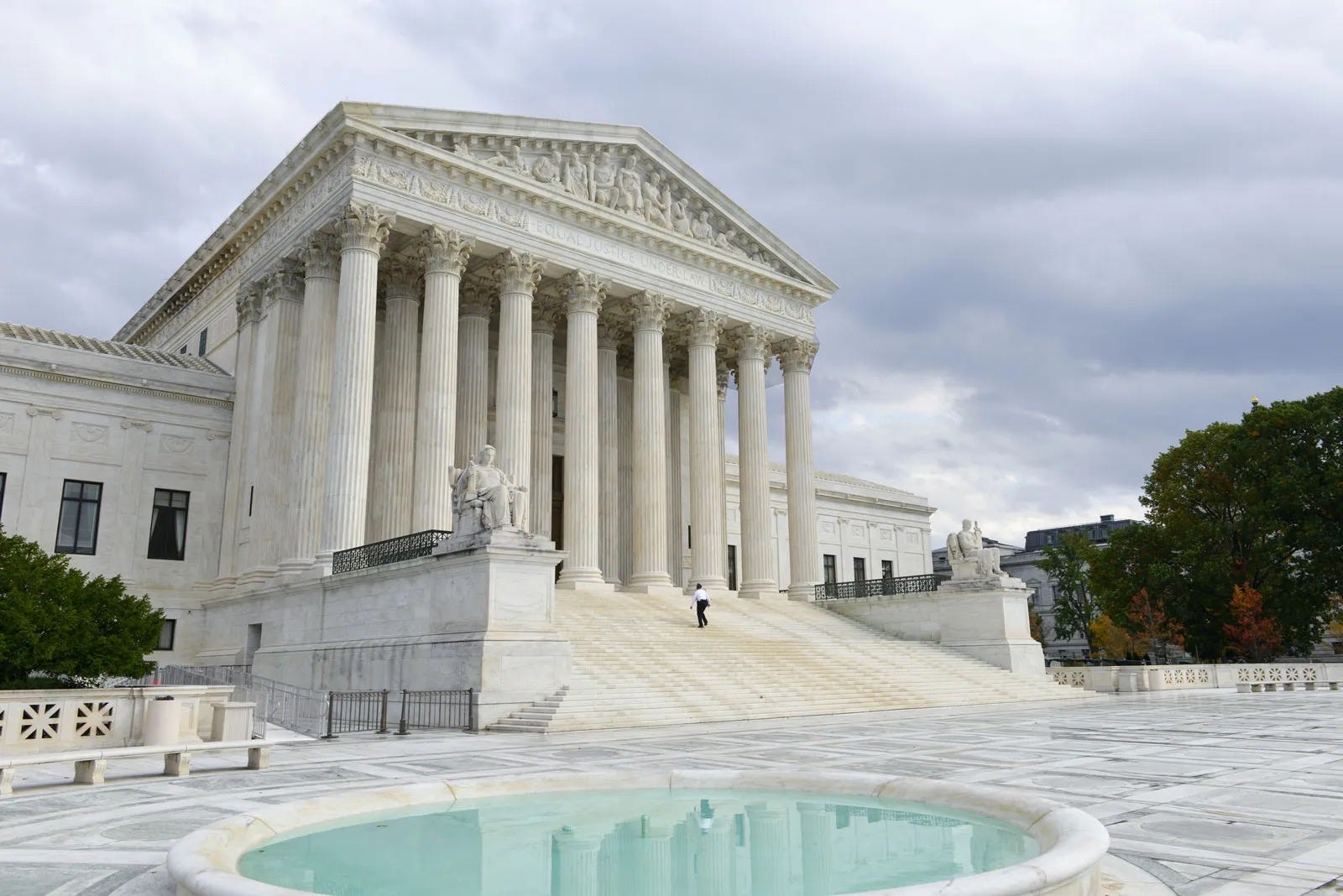
On June 30, 2026 the Supreme Court granted certiorari in two cases, Viramontes v. Cook County and Grant v. Higgins, that directly challenge bans on AR-15 platform rifles and similar semiautomatic firearms. The Court merged the two cases and told everyone to consider the first (and only) question from the Viramontes petition.
The petition itself is refreshingly clean. It has only one Question Presented:
Whether the Second and Fourteenth Amendments guarantee the right to possess AR-15 platform and similar semiautomatic rifles.
This Should Be a Straightforward Win
In my view, this is a very simple case under existing Supreme Court precedent.
Banning a firearm is a de facto violation of the Second Amendment. That means the government bears the burden of proof and must defend the ban as constitutional.
Heller (2008) and Bruen (2022) are crystal clear: firearms that are in common use for lawful purposes are protected by the Second Amendment.
The AR-15 platform is the most popular rifle in America. Millions of law-abiding citizens own them for self-defense, sport shooting, hunting, competition, and training.
There is no historical tradition from the Founding era that allowed the government to ban entire classes or types of firearms in common use. None.
Put together, these cases should be straightforward under the framework the Supreme Court has already established.
The Common Dodges and Why They Fail
We already know some states and lower courts will try to twist the Supreme Court’s words. They have attempted to narrow “in common use for lawful purposes” down to “in common use for self-defense only,” then argue that AR-15s are rarely used for home defense and can therefore be banned.
This kind of word game has been repeatedly rejected by the Supreme Court.
Heller and Bruen do not limit the right to self-defense alone. Lawful purposes include sport shooting, hunting, competition, and training, all areas where the AR-15 platform is used all the time. The Court has also explicitly discarded interest-balancing tests. The question is not whether judges think the gun is “too dangerous” or “not necessary.” The test is historical tradition. And the historical record contains no tradition of banning entire classes of commonly owned arms.
What This Means
If the Supreme Court applies its own precedents consistently, these bans should fall.
I would not be surprised by any outcome from 5-4 to 7-2 in favor of the plaintiffs. I would be utterly shocked by a 5-4 decision for the government, or by a near-unanimous 8-1 or 9-0 ruling for the plaintiffs. A 6-3 decision feels like the most probable result.
This will be one of the most significant Second Amendment cases since Bruen, with the decision expected in 2027.
I’ll be watching this one closely.
Further Reading
Supreme Court Order List (June 30, 2026) – Today’s Orders
District of Columbia v. Heller (2008)
New York State Rifle & Pistol Association v. Bruen (2022)
Larry Correia – In Defense of the Second Amendment