


SCOTUS’s recent ruling in Trump v. Slaughter has triggered wild claims of dictatorship. In reality, it simply restores a core constitutional principle that Congress and the Court have repeatedly recognized.
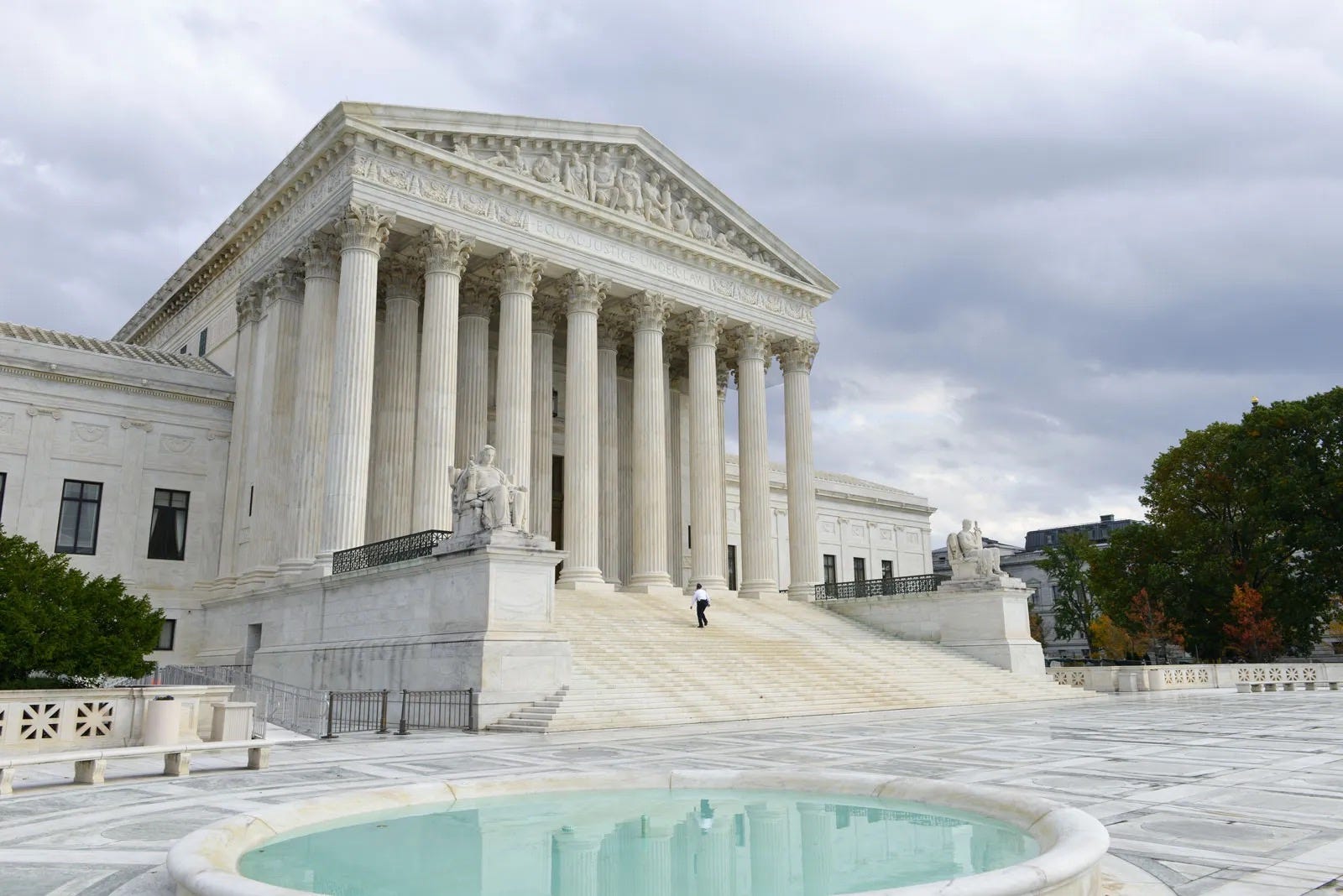
The Supreme Court’s 6-3 decision in Trump v. Slaughter has produced some of the most overheated reactions of the term. Critics are screaming about the end of democracy and the rise of an imperial presidency. Much of this hysteria reveals a deep misunderstanding of the Unitary Executive and basic constitutional design. Indeed, much of it is likely genuine, malicious misrepresentation of the Unitary Executive.
What the Court Actually Held
The Court ruled that the President may remove FTC Commissioner Rebecca Slaughter without cause and overturned the 1935 precedent Humphrey’s Executor. The core holding is straightforward: If an official exercises executive power, the President must be able to supervise and, when necessary, remove them. The Constitution vests “the executive Power” in one President, not in a collection of semi-independent commissions.
A Long History of Congressional Overreach
Congress tried this before. The Tenure of Office Act of 1867 attempted to prevent the President from removing executive officers without congressional approval. It led directly to the impeachment of Andrew Johnson (though he was not convicted) when Johnson removed Secretary of War Stanton from his position. Johnson believed, correctly, that the law was unconstitutional. Congress repealed the law in 1887, and the Supreme Court confirmed its unconstitutionality in Myers v. United States (1926). Humphrey’s Executor was always an outlier that Slaughter finally corrected.
Common Hysterical Claims
“Now the President can fill the entire executive branch with Republicans (or Democrats)!” Yes. And that is literally what the Constitution requires. The President is elected to run the executive branch. Voters hold the President accountable for results. The Senate retains its confirmation power for Officers of the United States.
“This makes the President a dictator who can do whatever he wants!” No. There is still the Constitution, a co-equal Congress with the power of the purse and legislation, and the Supreme Court. Checks and balances remain firmly in place.
“The world changes too fast for Congress to keep up, so we need independent agencies!” This sounds reasonable but is not constitutional. It has produced the modern Administrative State. That vast fourth branch that makes, enforces, and judges rules with little real accountability to elected officials.
The Unitary Executive is about Accountability
The Framers deliberately created a single, accountable executive. Alexander Hamilton explained in the Federalist Papers that the President must have the authority to ensure faithful execution of the laws. Slaughter does not grant new powers. It simply ends a 90-year experiment in semi-independent agencies exercising massive executive power without real presidential oversight.
Blurring power and removing accountability makes things worse, not better. And so, Slaughter is, in fact, a major step in restoring the Republic and recovering from many of our Late Republic issues and problems.
Observations from the Late Republic
#Observations #UnitaryExecutive #AdministrativeState #LateRepublic #SeparationOfPowers
Further Reading
The Federalist Papers, especially Nos. 67–77 (Alexander Hamilton on the Executive)
Myers v. United States (1926) – The foundational case on presidential removal power
Humphrey’s Executor v. United States (1935) – The flawed New Deal precedent overturned in Slaughter
Trump v. Slaughter (2026) – The actual opinion
Steven G. Calabresi and Christopher S. Yoo, The Unitary Executive: Presidential Power from Washington to Bush - excellent scholarly treatment of the history
Philip Hamburger, Is Administrative Law Unlawful? – Deep dive into the constitutional problems with the modern administrative state
These sources will give you the constitutional and historical background without the media hysterics.