


The modern narrative around the Crusades usually begins in 1095 with Pope Urban II’s call at Clermont. That is convenient if one wants to portray the West as the aggressor.
But the real story begins much earlier.
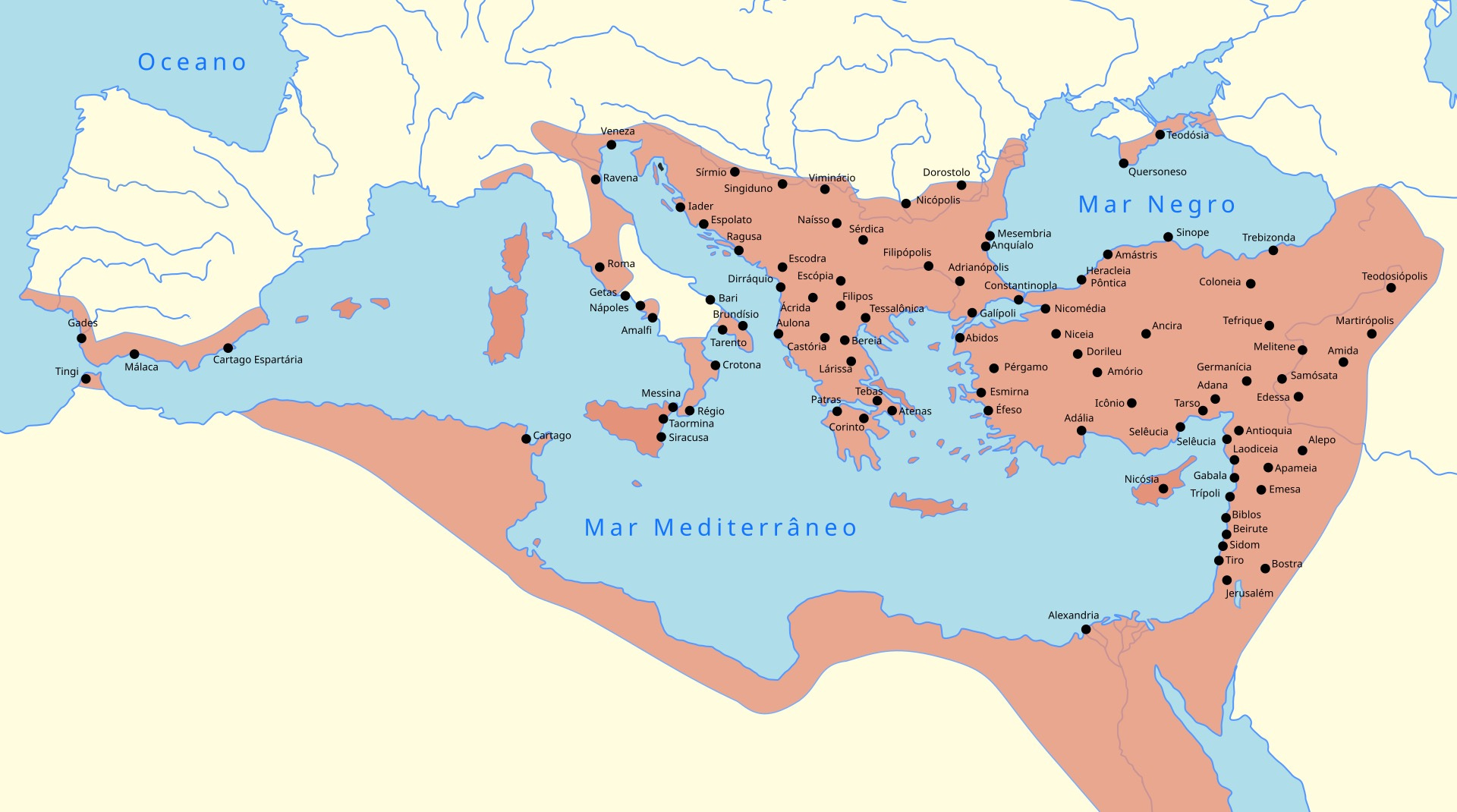
In the 4th century, during the reign of Emperor Constantine the Great and his successors, the Church formally recognized five major patriarchal sees — the Pentarchy — as the primary centers of Christian authority. These were:
Rome
Constantinople
Alexandria
Antioch
Jerusalem
Each traced its origins directly to the Apostles. These were not peripheral outposts. They were the heart of the Christian world.
At this time, the heart of Western Europe — what would become France, England, and Germany — was still largely peripheral to Christianity. Those regions were important, but they were not the civilizational or theological core. Iberia (Spain) was far more significant, as was the wealthy, urbanized East.
By the year 800 AD, only Rome and Constantinople remained under Christian control.
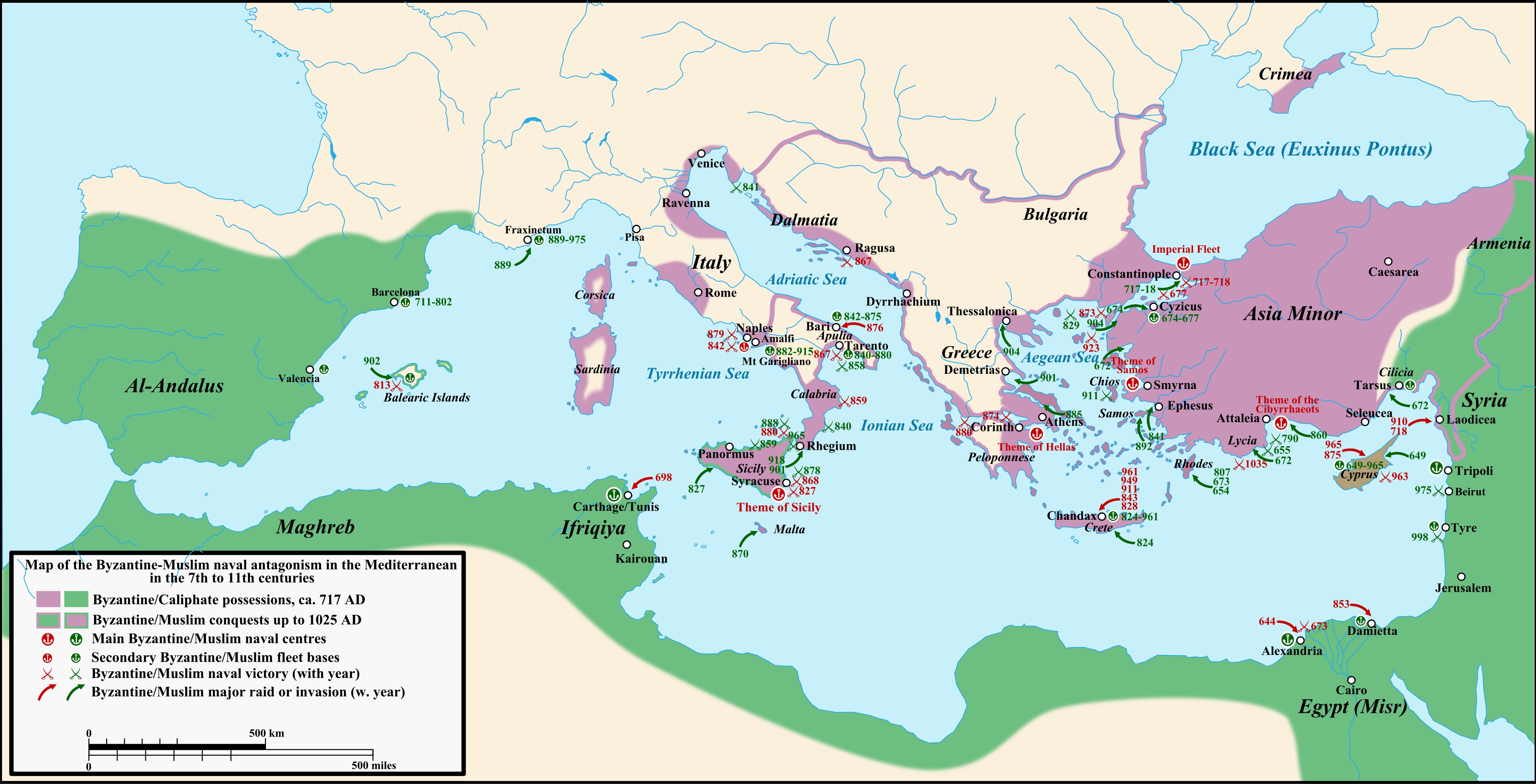
The other three great patriarchal sees — Alexandria, Antioch, and Jerusalem — along with the once-thriving Christian heartlands of Syria, Lebanon, Judea, Egypt, and North Africa, had fallen to Islamic conquest. What had been the cradle of Christianity for centuries was now under Muslim rule.
This was not a gentle transition. Contemporary Christian, Jewish, and early Muslim sources describe widespread violence, the destruction or conversion of churches, massacres of resistors, and the imposition of dhimmi status on the conquered populations. Dhimmi were non-Muslims (primarily Christians and Jews) allowed to remain in Islamic lands, but as second-class subjects. They were required to pay the jizya, a special poll tax, and lived under legal disabilities including restrictions on worship, dress, public life, and vulnerability to violent pogroms and forced conversion.
From roughly 800 to 1000 AD and beyond, the Christian world remained largely on the defensive. The various Caliphates and later the Seljuk Turks continued their pressure. Most of Iberia was lost, all of North Africa, the entire Near East, and large portions of Anatolia. France and Italy were repeatedly threatened and invaded. Only after centuries of desperate fighting were the Muslim advances finally stopped and, in some places, slowly pushed back.
This long defensive struggle is the essential context that is so often missing from modern discussions of the Crusades. The Crusades did not begin as unprovoked wars of aggression to seize new lands or control trade routes. They were launched, centuries later, as a belated attempt to recover territories that had been Christian for hundreds of years before the Islamic conquests.
This creates an obvious modern contradiction that many overlook. If the Holy Land (Judea / Syria Palaestina / Jund Filastin) had always been majority-Muslim, why do Jews and Christians worldwide still celebrate it as the ancient homeland of Judaism and the birthplace of Christianity? The reason is simple: because it wasn’t always Muslim. It was conquered.
The Reconquista in Spain followed the same basic pattern — a long struggle to reclaim land that had been Christian before the Moorish invasion of 711.
If your people, your culture, and your faith had been conquered, subjugated, and slowly erased from the map, would you eventually fight to take it back? Even generations later?
That is the question the Crusades force us to confront honestly.
Further Reading for Part 1
Raymond Ibrahim, Sword and Scimitar: Fourteen Centuries of War between Islam and the West (heavily based on primary sources from both sides)
The History of the Conquest of Egypt, North Africa, and Spain by Ibn Abd al-Hakam (early Muslim source)
The Chronicle of Theophanes (Byzantine perspective)
As I tell people repeatedly when they give me the tired "slavery is due to Europeans", the actual word "slave" come from the name of my ancestral people, the Slavs. Nestled along the coast of the Adriatic my ancestors were subject to countless slavery raids from north Africa and what's now the "Middle East".
Excellent article. Your comment on the Pentarchy brings to mind the depiction of the Pentarchy which is the Jerusalem cross. A central, large cross (Jerusalem) with smaller crosses in the four quadrants depicting the other centers. It has been a symbol of Christian unity for centuries.
Thanks for more great work.