


Building on the previous article — which explored the Founders’ vision of the Fourth Branch as the sovereign, educated, and armed citizenry — this piece examines how a Fifth Branch of elite institutions gradually rose to dominance.
Just as Rome’s total victory in the Third Punic War eliminated its last great rival and left it as the undisputed hyperpower of its world, so too did America’s complete victory in World War II create a parallel historical moment.

For the first time in over two thousand years — since Rome stood alone after the destruction of Carthage — a single nation emerged as the undisputed hyperpower of its known world. We defeated two of the most formidable military machines in history. We enabled our allies — especially Great Britain, which stood nearly alone in 1940–41, and the Soviet Union, which bore the brunt of the land war against Nazi Germany — while simultaneously rebuilding both our allies and our former enemies after the fighting ended. In an alternative universe where America had not provided critical aid early in the war, it is entirely plausible that the Third Reich would have achieved victory in Europe.
In that moment of triumph and generosity, the broad mass of the American people — the Fourth Branch — had every reason to trust the elite establishment that had guided the nation through existential crisis. The results spoke for themselves. Elite governance appeared not only competent, but almost miraculous.
Yet, as with Rome after its greatest triumph, the very success that earned such trust contained the seeds of future trouble. The institutions and experts who delivered victory were never fully demobilized. What began as emergency powers and temporary structures gradually became permanent. Over time, this growing apparatus evolved into what we now recognize as the Fifth Branch — a self-perpetuating elite network of bureaucracy, permanent political class, academia, and cultural institutions that operates with increasing independence from the citizenry it was meant to serve.
This article traces how that Fifth Branch rose, step by step, from the ashes of the Civil War through the Progressive Era, two world wars, and the Cold War — until it reached the point where it no longer merely served the Republic, but began to supplant it.
The Long Build-Up (1865–1930s)
The roots of the modern Fifth Branch reach back to the Civil War and its aftermath — one of the most morally complex and structurally transformative periods in American history.
The Civil War was never simply an abstract dispute over “states’ rights.” The Confederate states were explicit in their founding documents and declarations: they seceded primarily to preserve the institution of slavery. Yet the war also became a profound moral crusade for large segments of the Fourth Branch in the North. Abolitionists, churches, reformers, and hundreds of thousands of Union soldiers fought not only to preserve the Union but to end the moral abomination of human bondage.
Their moral conviction produced the Reconstruction Amendments:
The 13th Amendment abolished slavery.
The 14th Amendment defined citizenship, guaranteed due process and equal protection, and significantly expanded federal power over the states.
The 15th Amendment prohibited denying the right to vote on the basis of race.
Together with the Bill of Rights (Amendments 1–10), these two sets of amendments form the bookends of the Fourth Branch. The Bill of Rights created and protected it; the Reconstruction Amendments were created by it. They stand as the ultimate expression of what the Founders envisioned: an educated, armed, self-reliant, and moral citizenry — the sovereign people acting as the final guardian of liberty and justice.
Reconstruction itself (1865–1877) brought real gains — Black men voted, held office, and built schools and institutions — but it was also marked by corruption, political violence, and Northern war-weariness. The Compromise of 1877 ended federal enforcement in the South, allowing white Southerners to regain control. Over the following decades, Jim Crow laws, poll taxes, literacy tests, and violence systematically rolled back many of the political gains Black Americans had won and enabled Southern elites to regain power.
Importantly, unlike the expansions of federal power after World War I and especially World War II, most of the dramatic centralization of the Civil War era was eventually rolled back in the late 19th century. The federal government shrank relative to its wartime peak, and much authority returned to the states and localities.
This was still the America of men like my great-grandfather — born in 1894, educated in a small Missouri schoolhouse, who hunted, fished, farmed, and later served in World War I. Citizens who were self-reliant, morally serious, and willing to trust the government in a crisis, but who expected it to return power to the people once the emergency had passed.
The next major and more lasting shift came during the Progressive Era (roughly 1890s–1920s). Reformers, frustrated with corruption, inequality, and rapid industrialization, pushed through three constitutional amendments that fundamentally altered the balance of power:
The 16th Amendment (1913) created a permanent federal income tax, giving the national government an elastic new source of revenue.
The 17th Amendment (1913) shifted Senate elections from state legislatures to direct popular vote, weakening federalism.
The 19th Amendment (1920) granted women the right to vote — a genuine expansion of the Fourth Branch, though its promise remained uneven due to Jim Crow in the South.
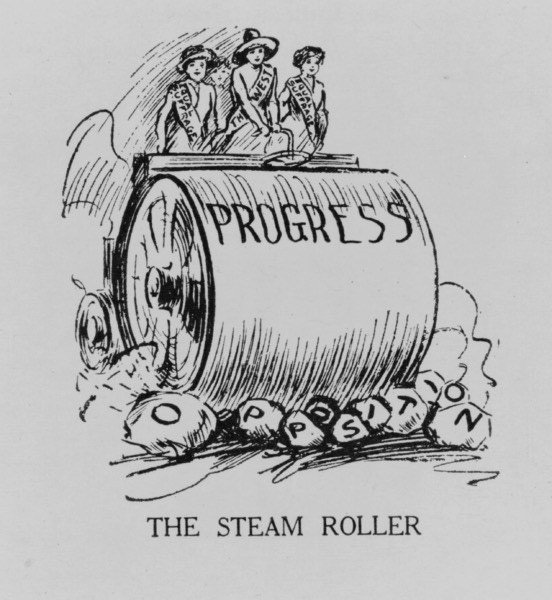
These Progressive amendments, layered atop the Reconstruction-era changes, created enduring structural tools that future elites would inherit and expand. What began as moral victories and reformist impulses gradually helped build the scaffolding for the modern administrative state — and helped pave the way for the nationalist, supremacist, and authoritarian tendencies that would later define much of Woodrow Wilson’s administration.
Wilson and World War I
The Progressive Era reached its first full expression of national power under President Woodrow Wilson.
Wilson’s administration marked a pivotal moment in the rise of the Fifth Branch. It combined intellectual progressivism with a strong streak of nationalism, centralization, and authoritarian control. For the first time, the federal government attempted large-scale mobilization of the economy and society in the name of “scientific” governance and national unity.
This era also revealed darker currents within Progressive thought. Many leading Wilson Progressives embraced eugenics, scientific racism, and a belief in rule by a credentialed elite. Wilson himself resegregated the federal civil service and military, purging Black officials who had gained positions in previous decades. His administration enabled the resurgence of the Ku Klux Klan at a national level and tolerated — even encouraged — the romanticization of the Lost Cause mythology in the South.
These tendencies — nationalism, eugenics, racial hierarchy, and faith in expert authoritarian governance — bore uncomfortable similarities to the early ideological stirrings of European fascist and National Socialist movements, even if the American version remained more restrained by constitutional limits and democratic habits.
World War I provided the perfect catalyst. Wilson’s wartime administration implemented sweeping powers: conscription, censorship, economic planning, and propaganda on a scale never before seen in America. The Espionage and Sedition Acts were used to suppress dissent. The government partnered closely with large corporations and unions in a corporatist model that prefigured later developments in the administrative state.
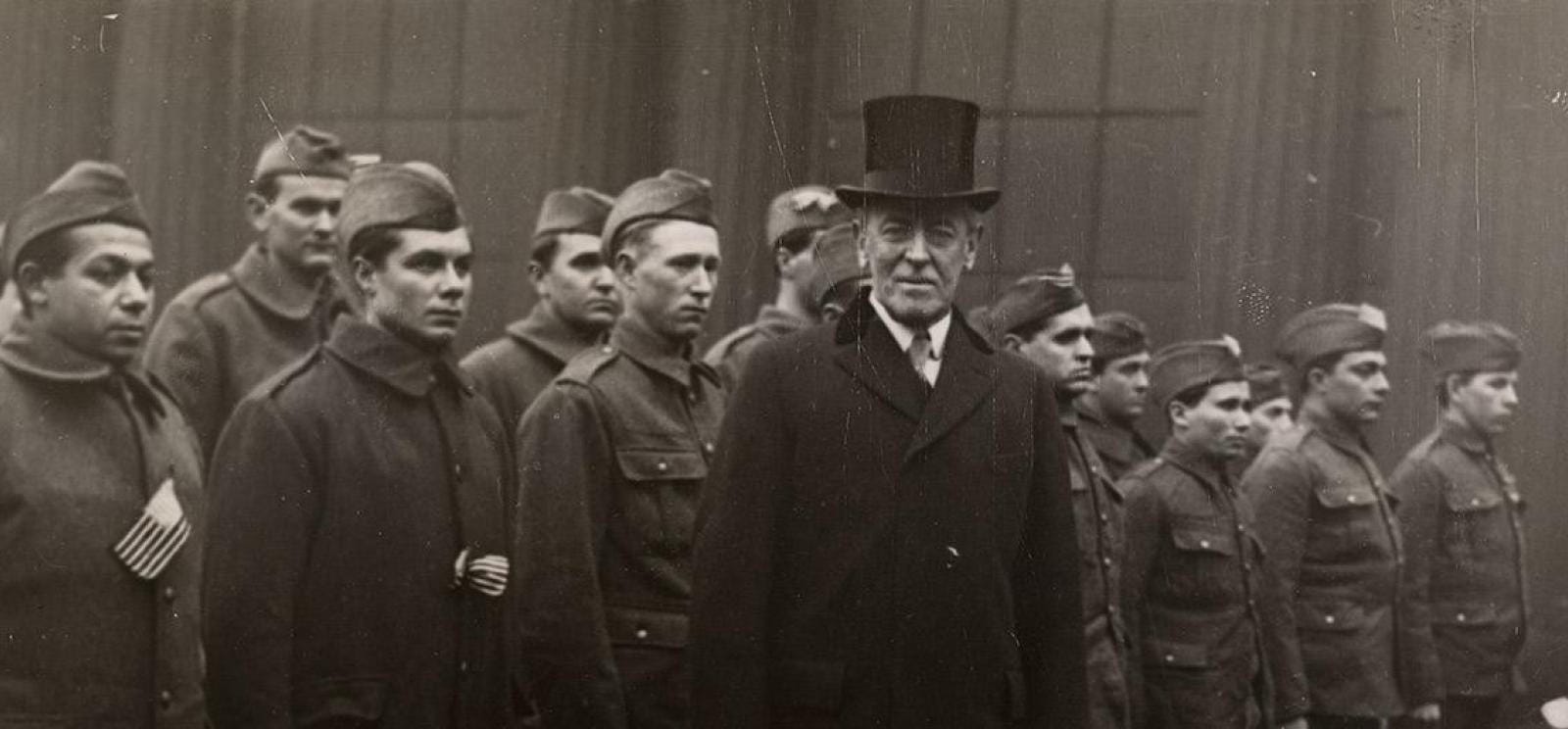
What Wilson and the Progressives did was clearly far outside the bounds of the Constitution as written and understood by the Founders. Yet the Fourth Branch — still trusting the government to ultimately respect strict constitutional boundaries — largely accepted these extraordinary measures as necessary for winning the war.
When the war ended, much of this apparatus was dismantled — but not all of it. Important precedents had been set: the idea that the federal government could legitimately direct society, silence opposition in the name of national security, and partner with private interests under the banner of expert management. These ideas would lie dormant for a time, only to be revived and greatly expanded in the crises of the 1930s and 1940s.
The Great Depression and the New Deal
The brief return to restraint in the 1920s under President Calvin Coolidge stood as a deliberate throwback to the Founders’ vision. Coolidge slashed federal spending, cut taxes, and resisted the expansion of government power. For a few short years, the Republic seemed to breathe easier after the wartime overreach of the Wilson administration.
The 1929 stock market crash and the Great Depression that followed shattered that respite. President Herbert Hoover, a Progressive Republican, responded with active federal intervention — public works programs, loans to banks and businesses, and efforts to stabilize wages and prices. While often portrayed as a do-nothing president, Hoover in fact continued and expanded the Progressive tradition of using government as an active manager of the economy. His approach laid important groundwork for what would come next.
Franklin D. Roosevelt’s New Deal represented the culmination of the Wilsonian project and the decisive leap forward in the institutionalization of the Fifth Branch. In response to the ongoing economic crisis, FDR and his Brain Trust created an unprecedented administrative state. New agencies, regulatory bodies, and federal programs proliferated rapidly — the NRA, AAA, WPA, CCC, SEC, FDIC, and dozens more. For the first time in peacetime, the federal government claimed broad authority to plan, regulate, and direct large portions of American economic life.
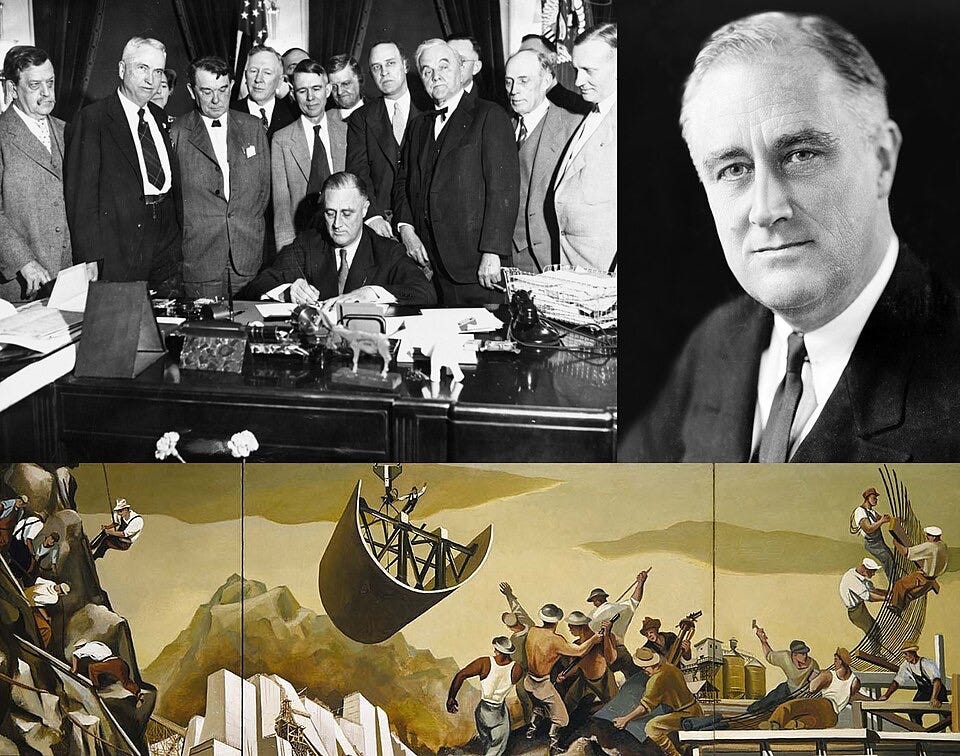
Roosevelt openly admired aspects of European authoritarian models during this period. He spoke glowingly of Mussolini’s Italy in private correspondence and early public statements, viewing fascist corporatism as a potential model for efficient governance. Many of his advisors and programs reflected this fascination with centralized planning and expert control.
The New Deal also continued and expanded earlier Progressive interest in eugenics as a quasi-scientific tool of government policy, including forced sterilization programs and population-control measures that remained active well into the 1930s and beyond. This embrace of eugenics and scientific social engineering by elite institutions planted some of the earliest seeds of Fourth Branch rejection of the Fifth Branch — a distrust that would later explode in the 1960s.
In short, the New Deal phase of FDR was the ultimate realization of Woodrow Wilson’s vision — the creation of a permanent, professional administrative state that operated with significant independence from Congress, the courts, and the electorate. What had begun as emergency measures during the Depression quickly became embedded institutions.
Yet even as the New Deal expanded the Fifth Branch, it still operated within a Republic that retained a living Fourth Branch. The broad mass of Americans — including men like my great-grandfather — continued to support strong federal action because the economic emergency felt existential and because the memory of wartime success still lent the elite establishment considerable legitimacy.
The real pivot would come later, when that legitimacy was tested and ultimately strained in the postwar era.
World War II — The High Point
A large, permanent administrative state wielding extra-constitutional power had long been the norm in Europe. In America, however, it was something genuinely new and different — a departure from the Founders’ vision of a limited republic anchored by a sovereign citizenry. We were still unsure what to do with this powerful new apparatus when history handed us the ultimate test.
World War II became the moment when that uncertainty was resolved — at least for a time.
The United States faced existential threats on two oceans against two of the most ruthless and capable military machines the world had ever seen. What followed was one of the most extraordinary national achievements in human history. American industry, logistics, science, and citizen-soldiers performed what still feels like a miracle.
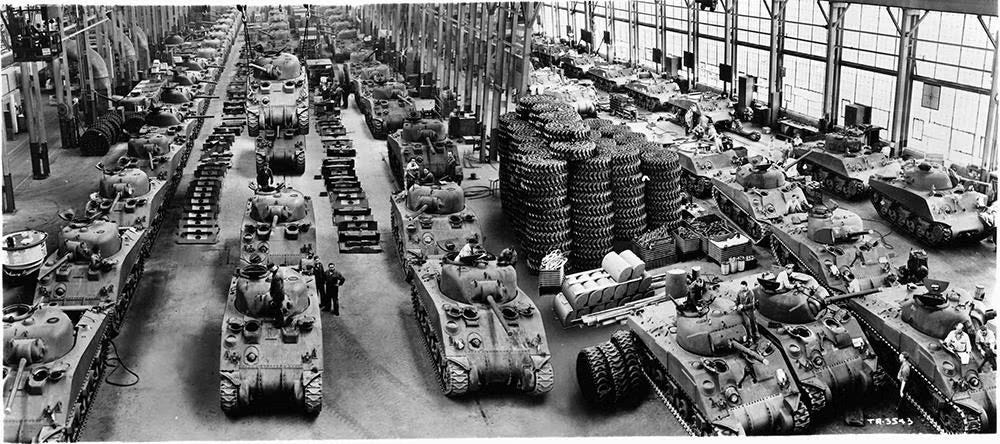
For the first time in over two thousand years — since Rome stood alone after the destruction of Carthage — a single nation emerged as the undisputed hyperpower of its known world.
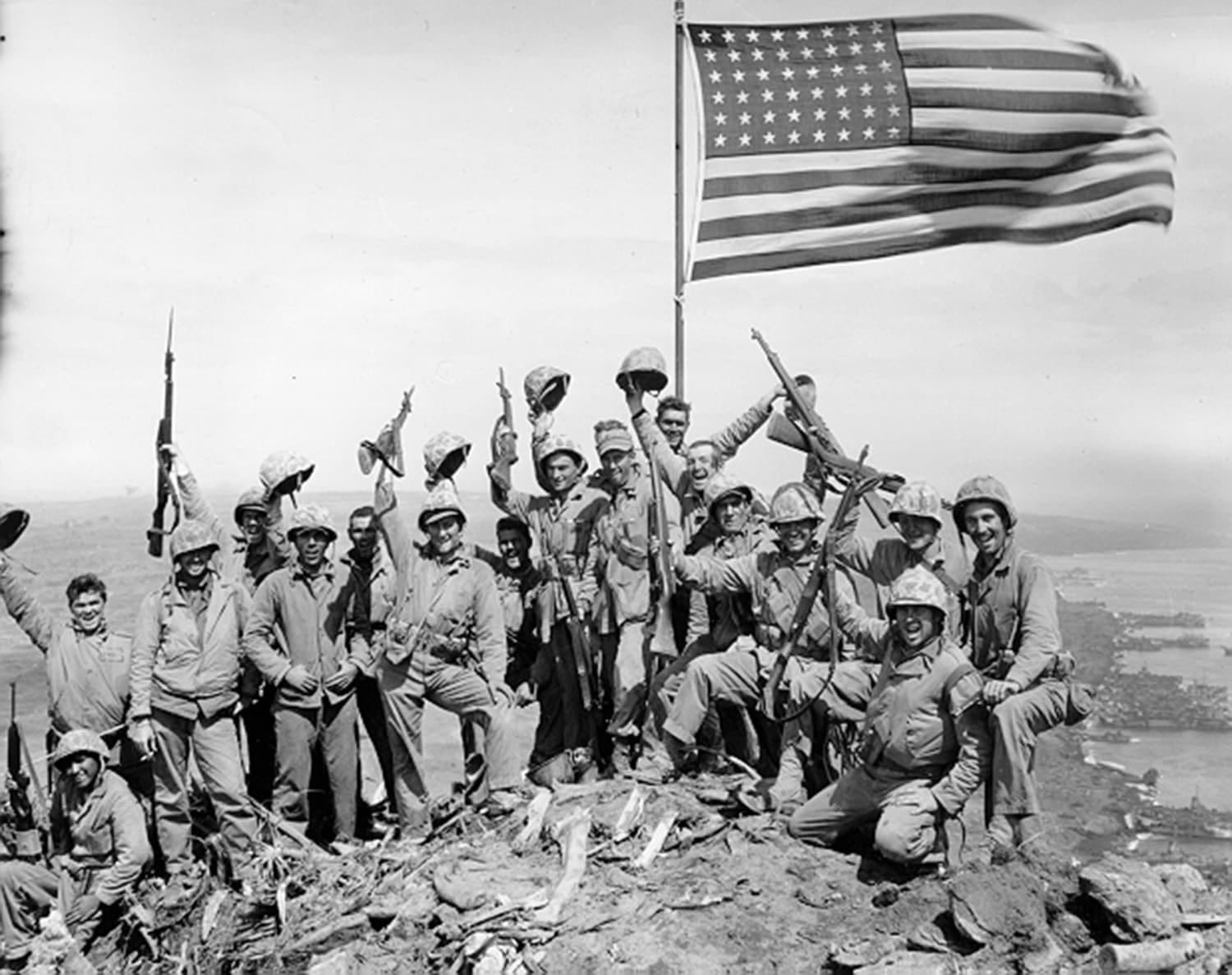
We defeated two of the most formidable military machines in history. We enabled Great Britain to survive when it stood nearly alone, and we provided critical aid to the Soviet Union as it bore the brunt of the land war against Nazi Germany. Then, when the fighting ended, we made a choice that still commands respect: instead of punishing or abandoning our defeated enemies, we helped rebuild both Japan and West Germany into prosperous, democratic societies.
One of the key instruments of that victory was the Office of Strategic Services (OSS) — America’s wartime intelligence and special operations agency. The OSS conducted espionage, sabotage, and covert operations behind enemy lines. It was granted extraordinary, often extra-constitutional powers because the survival of the Republic seemed to hang in the balance. Like so many other wartime creations, it should have been dismantled when the emergency passed. Instead, it became the direct predecessor to the CIA — another strand in the permanent expansion of the Fifth Branch.
For the broad mass of the American people — the Fourth Branch — this was the high point of elite governance. The results were undeniable and awe-inspiring. The same citizenry that had grown skeptical of government overreach in peacetime was willing, during this existential crisis, to grant enormous authority to the administrative state, the military leadership, and the industrial experts who delivered victory. Even today, those of us who believe deeply in the citizen-run Republic the Founders intended still look back on 1941–1945 with genuine reverence and pride.
This was America at its most formidable — militarily, industrially, and morally. For a brief shining period, the Fifth Branch appeared to be exactly what the country needed: competent, decisive, and capable of meeting history’s greatest tests.

But peaks are dangerous precisely because they create the illusion that the system that produced them can and should remain in permanent ascendancy.
When the war ended in 1945, the United States stood alone as the undisputed hyperpower of the world — only the second such power in more than two millennia. The temptation to keep the wartime machinery intact proved too strong for both political parties. What had been emergency powers and temporary institutions were gradually made permanent. The national security state, the military-industrial complex, and the vast administrative bureaucracy that had won the war were not fully demobilized.
Instead, they became the enduring foundation of the Fifth Branch.
The Golden Age (1945–late 1960s)
The years following World War II were not just a return to peace — they were a sustained period of American dominance and prosperity that has few equals in history.
With the Axis powers defeated, the United States stood alone as the undisputed hyperpower of the world. Our economy was intact and booming while much of Europe and Asia lay in ruins. We contained the spread of communism through the Truman Doctrine and NATO. We launched the Marshall Plan, pouring billions into rebuilding Western Europe.
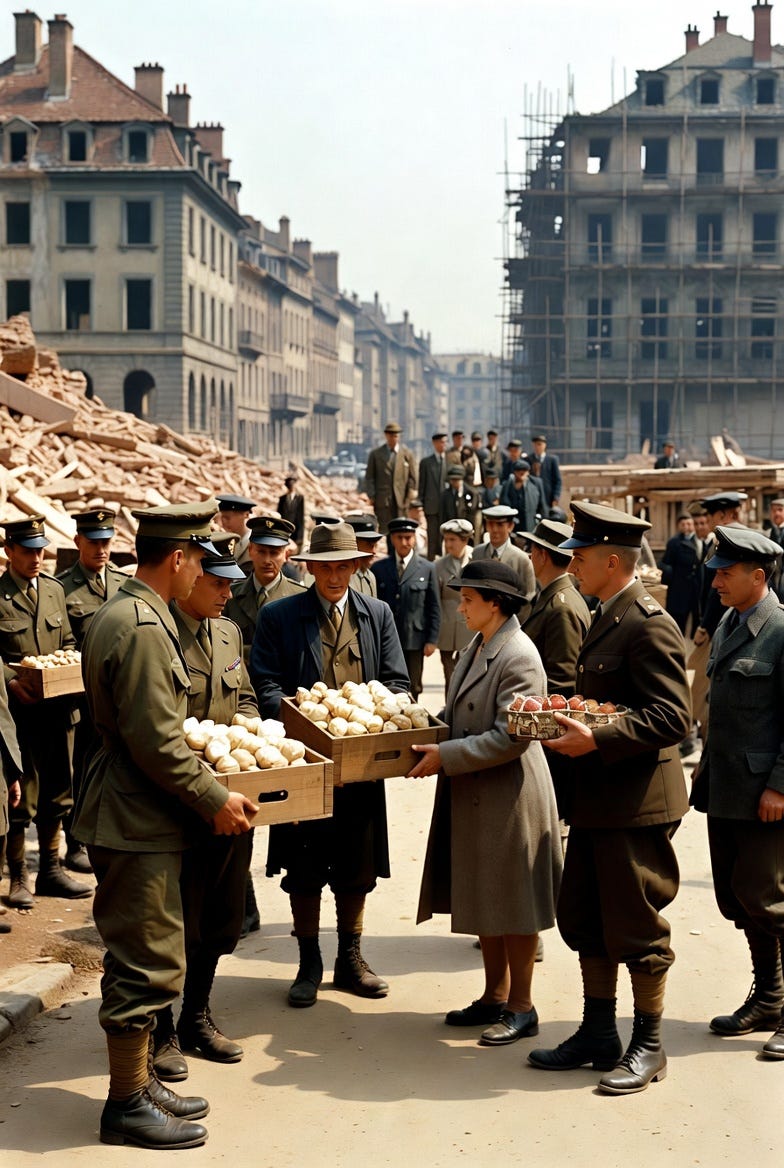
We helped transform defeated Japan and West Germany from bitter enemies into prosperous democratic allies. American industry, technology, and culture radiated outward, shaping the postwar world in profound ways. This combination of overwhelming power and strategic generosity had no real precedent.
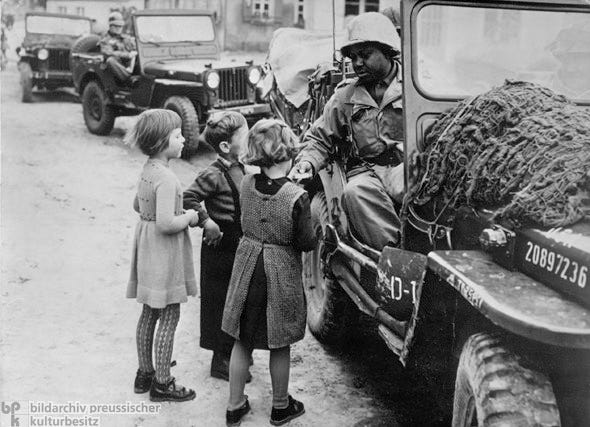
For the broad mass of the American people — the Fourth Branch — this era felt like validation.
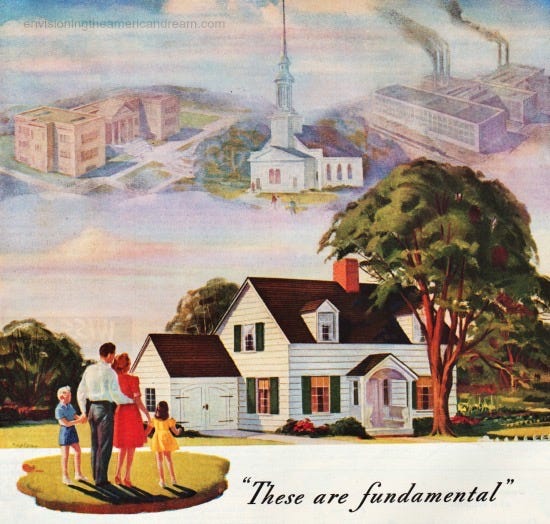
The elite establishment had delivered victory in the greatest war in human history and then presided over an extraordinary boom in living standards, home ownership, education, and global influence. Many citizens who had grown wary of government power during the New Deal were willing to accept continued elite stewardship because the results were so visibly successful.
This was the high point of the implicit social contract between the Fourth Branch and the Fifth Branch. The citizenry largely trusted the experts, bureaucrats, and political leaders to manage the complexities of a modern superpower because those leaders had just proven they could win the biggest challenges imaginable.
But even at its peak, cracks were beginning to form. The same administrative machinery that had won the war and rebuilt the world was never fully demobilized. The national security state, the intelligence apparatus (including the OSS’s successor, the CIA), and the growing federal bureaucracy continued to expand. What had been justified as temporary necessities during existential crisis slowly hardened into permanent institutions.
The Golden Age was real. The trust it earned was real.
And the danger it masked was also real.
Conclusion
The story of the Fifth Branch is not one of sudden seizure, but of gradual accretion.
It is important to remind ourselves that in the early American Republic, elites certainly existed. Merchants, landowners, lawyers, and military veterans populated the constitutional branches. But they operated within the system the Founders designed — subject to elections, separation of powers, and the ultimate sovereignty of the citizenry.
The danger we now face is different in kind. Beginning in the Progressive Era under Woodrow Wilson and accelerating dramatically after World War II, a new form of elite power emerged: a permanent, unelected administrative bureaucracy that stands apart from the three constitutional branches. This apparatus developed its own institutional interests, continuity across administrations, and insulation from meaningful oversight by the Fourth Branch. What had once been accountable elites working inside the Republic gradually gave way to a self-perpetuating Fifth Branch operating largely outside it.
What began as emergency powers during war and crisis slowly hardened into permanent institutions. The same elite apparatus that delivered the stunning victories of World War II and presided over the Golden Age was never fully demobilized. Instead, it expanded, entrenched itself, and eventually began to view its own continued dominance as both natural and necessary.
For a time, the broad mass of the Fourth Branch willingly accepted this arrangement. The results — defeating fascism, containing communism, rebuilding allies and former enemies alike, and creating unmatched postwar prosperity — were real and awe-inspiring. America stood as the first true hyperpower since Rome after the destruction of Carthage. In that moment, elite stewardship appeared not only competent, but almost providential.
Yet every peak carries within it the seeds of its own challenge. The very success that earned such trust also created the illusion that the system which produced it could and should remain in permanent ascendancy. As the memory of those great triumphs faded and the performance of peacetime institutions proved far more uneven, the implicit social contract began to fray.
The Fourth Branch — that sovereign, educated, and armed citizenry the Founders assumed would always stand as the final guardian of liberty — started to remember its own role. Large portions of it no longer believed the elite establishment was competent, or even legitimate, enough to run the Republic without meaningful restraint.
This is where the American Republic begins to echo the late Roman Republic most clearly. External triumph gave way to internal consolidation. Institutions meant to serve the people gradually began to serve themselves. Norms eroded. Extraordinary measures became routine.
Article 5 will examine how that social contract finally broke down — how the Fourth Branch began to reassert itself, often clumsily and unevenly, how the Fifth Branch reacted with growing alarm and force, and what this deepening tension means for the future of the American Republic.

The Founders gave us a remarkable gift: a republic in which the people were never meant to be mere subjects. Whether we can rediscover and rightly exercise that Fourth Branch — while resisting the temptations of both chaos and authoritarian control — will help determine if our republic endures, or follows Rome down the familiar path from Republic to Empire to Collapse.
Further Reading
On the Progressive Amendments and the shift in power: The 16th and 17th Amendments – National Constitution Center
On Woodrow Wilson, Progressivism, and eugenics: War Against the Weak by Edwin Black (key chapters on the American eugenics movement)
On the OSS and the birth of the modern intelligence community: “The Office of Strategic Services” – CIA Official History
On the Marshall Plan and postwar rebuilding: “The Marshall Plan” – U.S. State Department Historical Series
For the Roman parallel: Mike Duncan’s The History of Rome podcast (episodes 28–48 on the Gracchi through the early Empire). Easy access on Spotify or his Patreon.
For a narrative history of the Late Republic: Mike Duncan’s book The Storm Before the Storm is excellent.
Observations from the Late Republic
Modern Minuteman
#Observations #FifthBranch #LateRepublic #minuteman #GoldenAge #FoundersVision #CitizenSovereignty #Elites #FreeCitizens
Unrecognized by your piece but - I sincerely believe - a very important aspect of what led to the flowering of government social control was the onset of the "Spanish Flu" during World War 1. It vastly consolidated government power in a very personal way to most of the country (via legally enforced quarantines, among other things) and at the same time helped elevate the standing of the expert class - the heart of progressivism - in the perceptions of the average American. When COVID-19 was still novel to the world in early 2020, I was in the middle of reading a very informative recounting of said influenza's origin and how our country responded to it. To my dismay, most of the public didn't push back too hard on this round of overreach, either.