


A reader pushed back, arguing it’s not really “government” doing this, but a piece of the government. The “deep state” and rogue bureaucrats. Here’s why we have to be honest about what we’re facing.
I received an interesting comment on Thursday’s post about the upcoming Supreme Court cases on “assault weapon” bans. The commenter made a point that deserves a full response:
“It is not ‘government’ that is attacking American freedoms. It is an anti-American sliver of bureaucracy. A parasitic piece of the deep state…”
I understand the frustration with the administrative state. But we have to deal with reality as it exists.
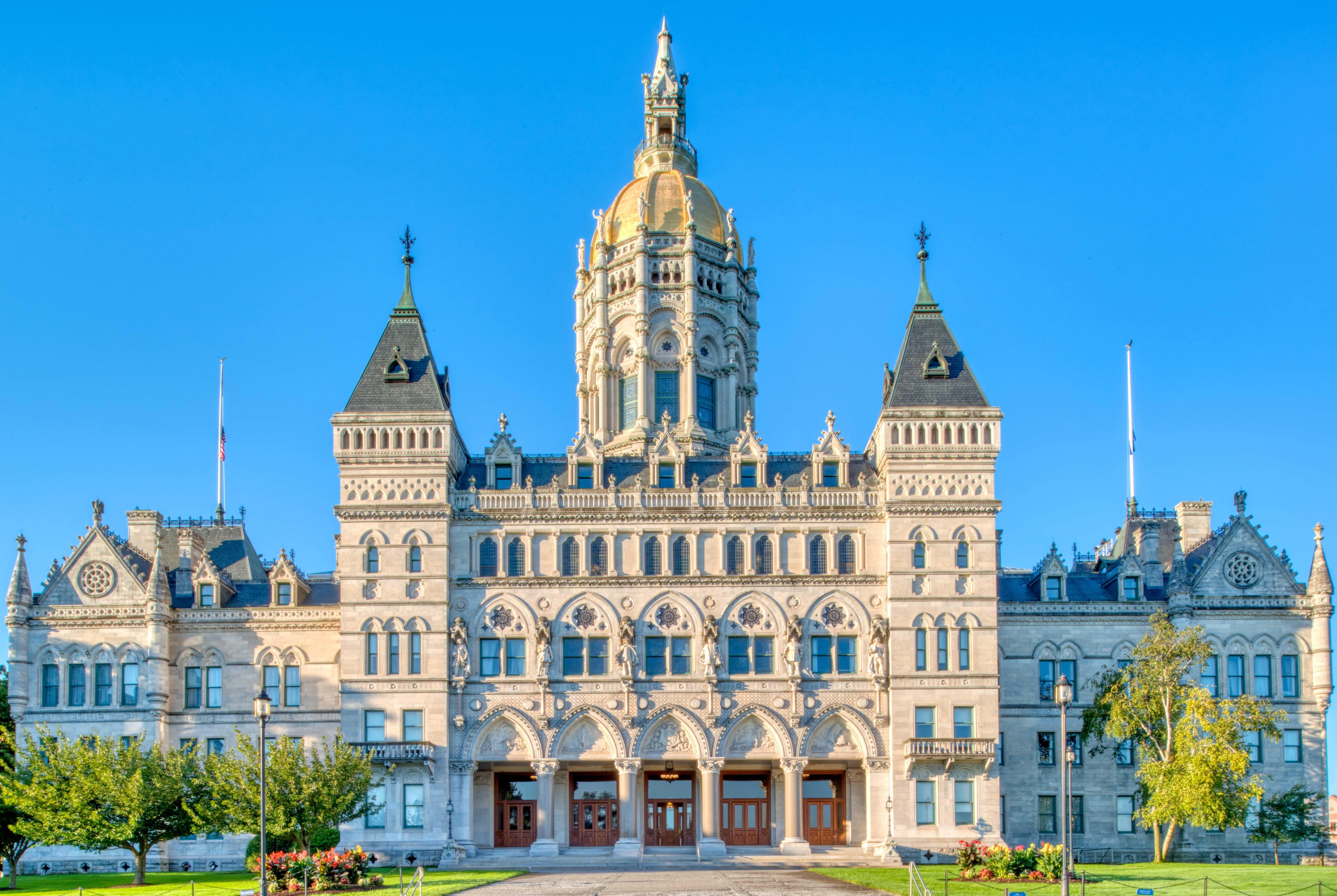
The cases before the Supreme Court — Grant v. Higgins (Connecticut) and Viramontes v. Cook County (Illinois) — were not the work of rogue bureaucrats. They were passed by elected legislatures, county commissions, and city councils, and enforced by the executive branches of those governments. The same is true in California, New York, New Jersey, Maryland, Washington, Delaware, Hawaii, Rhode Island, Illinois, and the District of Columbia.
This is government, state and local, actively infringing on a core constitutional right.
The entire point of the Constitution is that certain foundational laws, processes, and protections of individual rights are taken off the table. The government is constrained by those limits. When it oversteps those bounds, we have peaceful mechanisms to enforce the Constitution. Those mechanisms include elections, legislation, federalism, the courts, and direct petition and redress of grievances.
As President Coolidge observed on the 150th anniversary of the Declaration of Independence, the genius of the American system was placing certain rights beyond the reach of government. The Constitution is not a grant of unlimited power to majorities or bureaucracies. It is a deliberate restraint. It is a document in which We the People removed foundational rights and principles from ordinary political control and the States agreed to this governing framework.
It is an important point in all of this that each State either ratified the Constitution or agreed to its rules and constraints when they were admitted to the Union. Now, some of the States want to change the deal. But the Constitution has removed that option from them.
Justice Clarence Thomas has made this point powerfully throughout his tenure on the Court. He consistently argues that the Constitution represents a decision by the people to place certain subjects and rights beyond the ordinary reach of majorities and government officials. The Right to Keep and Bear Arms, protected by the Second Amendment, are not suggestions or policy preferences to be balanced away by desire of the government. Rather, they are structural limits on what government is allowed to do, even when majorities want something different.
Calling these actions merely the work of a “sliver of bureaucracy” obscures the truth. We are seeing elected majorities in multiple jurisdictions choosing to override constitutional protections. That is tyranny of the majority, exactly the kind of thing the Bill of Rights was designed to prevent. We must understand what these governments will argue to support violating our rights if we are going to defeat those arguments effectively.
The deep state and unaccountable administrative agencies are real problems. But in these cases, we are also confronting clear exercises of state and local governmental power. We have to name it accurately if we’re going to defend our rights effectively.
The Constitution is the backstop. That’s why these Supreme Court cases matter so much.
Observations from the Late Republic
#Observations #FourthBranch #SecondAmendment #ConstitutionalRights #LateRepublic
Further Reading
Grant v. Higgins and Viramontes v. Cook County (pending before SCOTUS)
Federalist No. 10 (Madison on the dangers of faction and majority tyranny)
Add in Colorado and Oregon. Oregon did it by referendum which is even more disturbing.
By God!; this is why I read each of your column; a big dose of plain talking.
To paraphrase a recent authoritarian; "It's the government, stupid"
Tip o' the hat to ya.