

Now that SCOTUS has taken up the “assault weapon” bans, here are the main arguments the defending states will likely make. And why they conflict with Heller and Bruen.
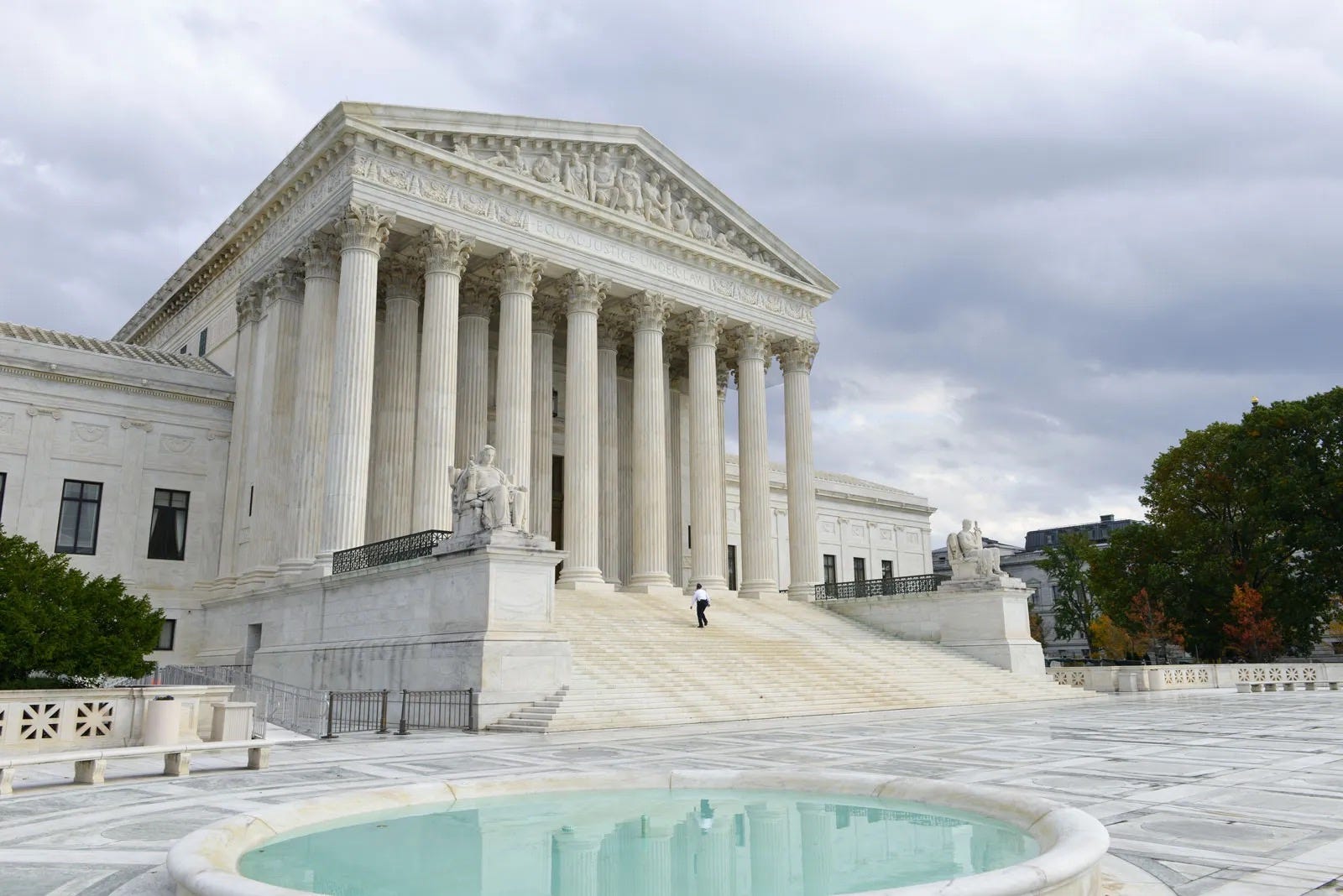
In Tuesday’s post I explained why these cases should be straightforward wins for the Second Amendment under existing Supreme Court precedent. Today let’s look at the other side of the coin: what the government (states and localities defending the bans) will actually argue before the Court.
They are not without arguments. But most of them run head-first into the framework established by Heller (2008) and Bruen (2022).
The Government’s Likely Main Arguments
“These are weapons of war” / Military-style rifles They will emphasize that the AR-15 is derived from the military’s M16/M4 and therefore falls outside Second Amendment protection. “This is not the musket your Founders had in mind.”
“The AR-15 is unusually dangerous” There is a historical provision for banning weapons that are dangerous and unusual and the government is going to try to use this with the claim that the AR-15 (and similar semi-automatic rifles) are unusually dangerous. They will also point out that the Founders couldn’t have foreseen these sorts of rifles.
“AR-15s are not commonly used for self-defense” They will try to shrink “in common use for lawful purposes” down to “in common use for self-defense in the home,” then cite statistics claiming most defensive gun uses involve handguns.
“These bans are consistent with historical tradition” They will point to Founding-era laws regulating “dangerous and unusual” weapons, or 19th-century laws on concealed carry, Bowie knives, or trap guns, and argue that modern semiautomatic rifles are analogous.
“Public safety demands it” Mass shootings, high-capacity magazines, and the rifle’s effectiveness in rapid fire will be front and center. They will essentially ask the Court to engage in interest balancing: “Even if there is a right, it must yield to modern public safety concerns.”
Why These Arguments Should Fail
The “weapons of war” claim was already addressed in Heller. The Court made clear that the Second Amendment protects weapons in common use among the people, not just those suitable for militia service. The AR-15 is the most common rifle platform in America and that fact matters more than its military lineage.
The historical tradition of banning arms in the Founding era and early Antebellum era is extremely limited and focused on dangerous AND unusual. That is, it’s not just that the arm dangerous nor just that it is unusual. It is both. The AR-15 is most certainly not unusual; rather it’s very common and present in probably 20 million households.
The attempt to narrow “lawful purposes” to self-defense alone contradicts the plain language of Heller and Bruen. Lawful purposes include hunting, sport shooting, competition, and training. The AR-15 dominates those categories.
There is no clear historical tradition of banning an entire class of commonly owned arms. The Founding generation did not prohibit citizens from owning the most effective firearms available at the time. Trying to stretch obscure 19th-century laws to cover millions of modern rifles is exactly the kind of loose analogical reasoning Bruen warned against.
Finally, Bruen explicitly rejected interest-balancing tests. The Court is no longer supposed to weigh “how important is this right versus how bad is the problem.” The test is history and tradition. Public safety concerns must be addressed through means that don’t violate the constitutional right.
Bottom Line
The government has plausible-sounding arguments that will appeal to those who already dislike the Second Amendment. But under the Supreme Court’s current framework, they are on very weak ground.
I continue to expect a decision somewhere between 5-4 and 7-2 striking down these bans. The real fight will be over how broadly the opinion is written. A strong, clear opinion could sweep away similar bans in multiple states. A narrower one would still be a win, but would leave more litigation ahead.
This is a big one. I’ll keep following it as the briefing schedule develops.
Further Reading
Supreme Court Order List (June 30, 2026) - Today’s Orders
District of Columbia v. Heller (2008) - full decision
New York State Rifle & Pistol Association v. Bruen (2022) - full decision
Larry Correia – In Defense of the Second Amendment
The Volokh Conspiracy, David Kopel - The History of Bans on Types of Arms Before 1900
#SecondAmendment #SCOTUS #Bruen #Heller #GunRights #AR15
Critical correction!
It is not "government" that is attacking American freedoms.
It is an anti-American sliver of bureaucracy. A parasitic piece of the deep state that pushes such totalitarian ends.
The American people are self-governing and an evil class of corrupt statists is now embedded in the hired-class of public servants.
Remind them of their lowly place in society, loudly and often.