


crossposted, sorry not sorry
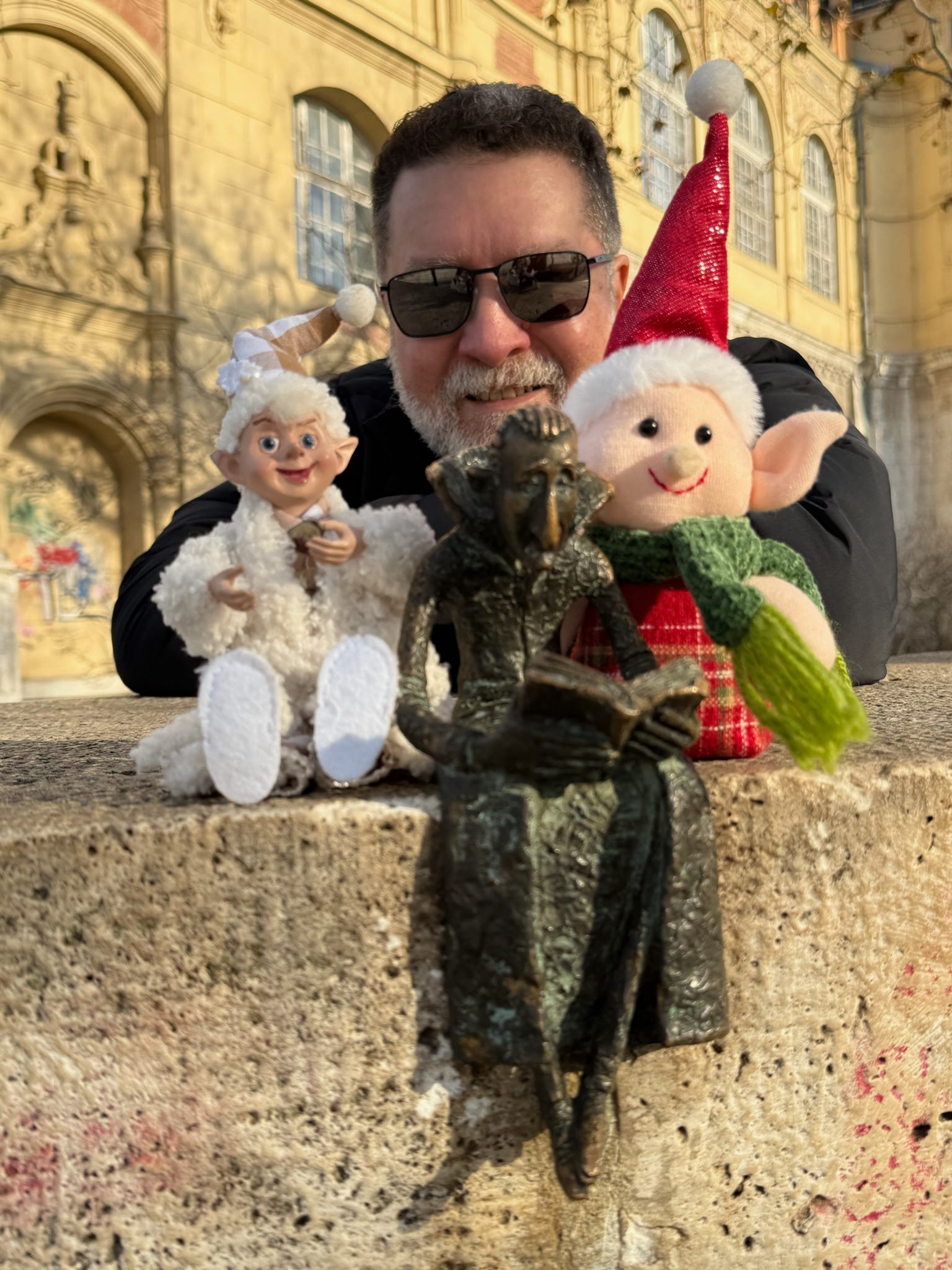
My children, lean in. Pour a little wine, and if you’re old enough, a small sip of pálinka, the way I first tasted it when I was knee-high, standing on a chair in the kitchen.
This is the story your great-grandfather Karl told me, the way his mother Iva once told it to him under the flickering Shabbat candles.
In the Carpathian Mountains near Kolozsvár (Cluj), there lived an Ashkenazi Jewish girl named Iva. When she came of age, a shadchan traveled from Budapest and arranged a match with József Farkas, a steady young printer. Iva took the Farkas name and made the long journey from the beech forests and mountain villages to the big city. She brought with her the silver thimble her grandmother had given her, along with the words: “Trees bend, little willow. They do not break.”
She and József married, built a home in Pest, and Iva became a skilled seamstress. Their son Karl Farkas was born in the early 1920s. He learned the printing trade from his father and the tastes of the old country from his mother: rich gulyásleves, csirke paprikás glowing with paprika, and töltött paprika carefully stuffed and simmered. Those smells filled their apartment alongside the Friday night candles.
Karl married Sara, and together they had a daughter. Eva, my mother, your grandmother. But the world grew dark. In 1944 the Arrow Cross seized Budapest. The Farkas family fought for their lives in the Pest Ghetto. They resisted however they could. Two of our cousins did not survive; they ended up in the mass grave at the Dohány Synagogue.
Somehow, through courage and mercy, the family made it through the terror. But József did not live long after the liberation.
By 1948 the communists had closed their fist. Karl and Sara decided they could not raise Eva under that shadow. They walked out of Budapest with almost nothing, heading for Austria. The journey was brutal. Sara, already weakened by the war years, fell ill with pneumonia and died that same year. Karl carried on alone, raising young Eva with the stories, the prayers, and the recipes.
Iva remained in Budapest long enough to know her granddaughter had reached safety. The silver thimble passed down.
In time, Karl and Eva made their way to America — to Northern California. There, my mother Eva grew up, married, and had children. One of them was me — Farkas, a dark, curly-haired boy. In that sunny land, most of the other kids had straight blonde hair like Shaun Cassidy and noses like English kings. I stood out. They teased me for it, called me names for my hair and my face. And we, on our side, called them all “English”. It was just as sharp and spiteful as the names they had for us.
But in our house the old world refused to fade. I learned from my grandfather Karl and from my mother Eva how to cook gulyásleves, csirke paprikás, and töltött paprika. I learned to love pálinka in tiny sips on special occasions. And around the Shabbat table, the stories were told — of Iva the mountain girl who came by matchmaker, of the silver thimble, of the Ghetto resistance, of the long walk to Austria, of loss and survival.
Eighty years after 1944, I returned to Budapest. I left pennies in the bronze shoes along the Danube. I stood inside the Dohány Synagogue and cried for the cousins I never met and for all those who did not make it out.
And then, in the same trip, I stood smiling in front of Vajdahunyad Castle, with little Dracula and our two silly travel elves. Because even after everything, we still know how to laugh, how to play, and how to reclaim joy in the city our family once had to flee.
We carry all of it: the Ashkenazi prayers, the Hungarian kitchen, the Carpathian strength, the Farkas name, the curly hair, and the memory of both resistance and grief.
We bend, but we do not break.
Now pass the gulyás. Tell me: which dish do you still make the way your grandmother taught you?
A lovely story! Many thanks for sharing it.
My grandmother made palatschinken -- which Wikipedia says is Austrian, but which I assume came to us via Hungary. Delicious memories.
https://en.wikipedia.org/wiki/Palatschinke