


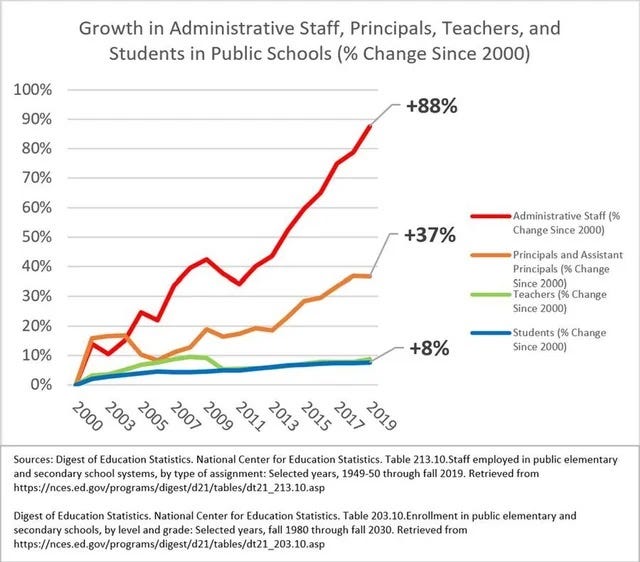
The vast majority of new education funding for years now has gone to grift: more administrators, fancy new buildings built way over budget under union contracts, and especially Special Education (SPED).
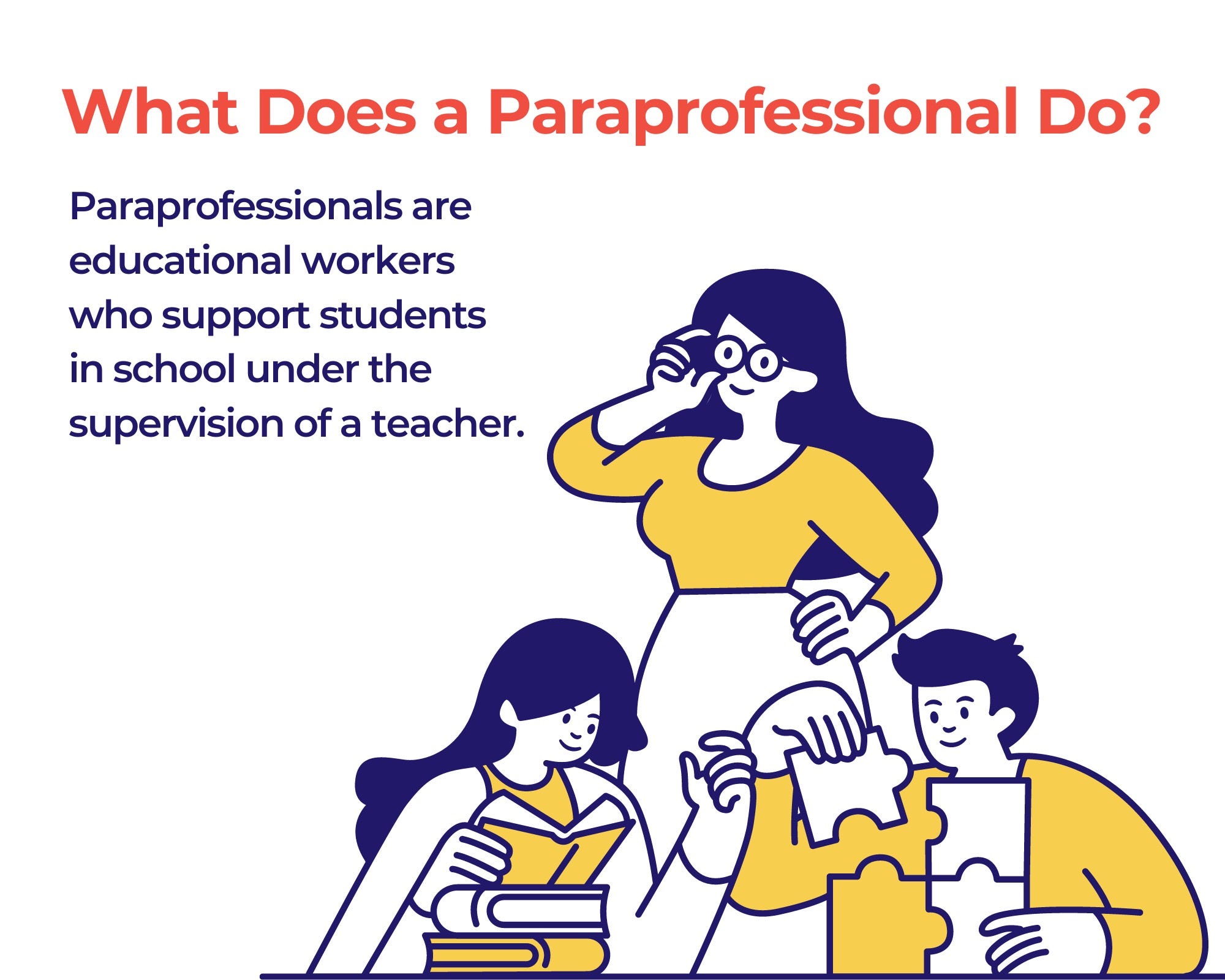
For those unfamiliar, federal law requires schools to integrate special education students into general education classrooms to the “maximum extent appropriate.” For students with milder needs, this can work. For many others, it means assigning a full-time caregiver, politely called a “para-educator,” to handle their needs throughout the school day.
I was largely unaware of the true scale until my wife spent five years working as a para-educator. What she experienced horrified me. The level of care required for many students went far beyond any reasonable definition of “education.” It was intensive, daily caregiving, often one-on-one, funded by taxpayers who have almost no idea this is happening.
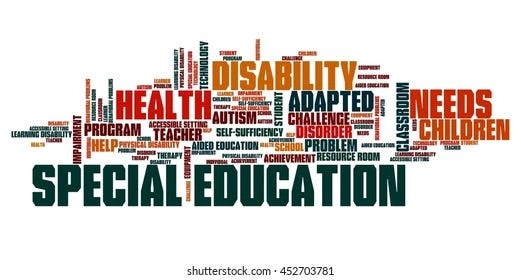
Worse, these para-educators frequently lack meaningful specialized training for handling severe disabilities or challenging behaviors. Many enter the role with little more than a high school diploma and on-the-job learning. According to MDPI, as a result, they are quite often subjected to physical and verbal abuse from the very students they are assigned to support. Bruises, bites, scratches, thrown objects, and constant verbal aggression are common realities that get minimized or ignored in public discussions.
The Hidden Caregiving Reality
For students who cannot walk, talk, see, hear, feed themselves, or regulate behavior, a para-educator provides mobility assistance, toileting, feeding, medical monitoring, and constant behavioral support. In practice, the SPED system has become a taxpayer-funded daycare and respite program. It dramatically relieves the parental burden for families of children with profound disabilities.
This support is humane and necessary in some form. Raising a child with severe disabilities is an immense, round-the-clock challenge. But the public largely does not understand that a significant and growing portion of local school budgets now funds this intensive caregiving, often in general education classrooms. The broader citizenry remains unaware. Nor do most taxpayers realize the toll this takes on the under-trained paras themselves.
Nationally, special education serves about 13-15% of students but consumes a disproportionate share of resources. Per-student costs for SPED are typically 1.5–2x higher than general education, and far more for severe cases. Federal IDEA funding was supposed to cover 40% of excess costs but chronically delivers only around 10-12%. This leaves states and local districts to fill the gap from general funds. In California, the numbers are especially stark, with local taxpayers picking up the majority of the bill.
Administrative Bloat: The Davis Example
Even the raw administrator numbers don’t tell the full story. Staffing roughly tripled in key categories while compensation per role soared dramatically.

My alma mater, Davis Senior High School in Davis, California, is located in an affluent university town with a highly educated population.
1985 (~1,400 students):
1 principal, 1 vice principal, 1 athletics director
3 counselors, 1 nurse, 1 librarian
4 office/secretarial staff
A typical high school principal earned roughly $40k–$55k. In today’s dollars, that is roughly $124k–$170k.
2026 (~1,750 students):
1 principal plus 3 vice principals plus 1 athletics director
6 counselors, 2 nurses, 2 psychologists, 1 librarian
12 office/secretarial staff
High school principals and top admins in California now earn $150k–$200k+ base, with total compensation much higher. District-wide admin costs have ballooned.
Student population grew 25%. Admin and support layers and their costs rose 400–500% or more.
Yet outcomes haven’t improved at all, let alone proportionally. We had strong graduation and literacy rates in the 1980s. Today, even students graduating in the top 20% of their class are showing up at CSU and UC campuses needing remedial math and English. High graduation rates (around 95%) and respectable CAASPP proficiency numbers hide the truth: actual academic preparation has declined. The expanded bureaucracy seems dedicated more to managing SPED inclusion, compliance mandates, equity initiatives, and meetings than to driving rigorous classroom instruction.
Entrenched Conflicts of Interest
And this doesn’t even touch the crazy political layer. In many districts, school boards, city administrations, and city councils are riddled with conflicts of interest. Board members often have family or professional ties to the district. City officials wear multiple hats that blur lines between oversight and spending.
In the district I now live in, for example, the mayor is also the school district operations director. When the people approving budgets and bonds are the same ones, or closely tied to those, managing operations and benefiting from expanded staffing and contracts, real accountability vanishes. This creates a cozy ecosystem where more spending benefits the insiders: administrators, unions, and service providers. Meanwhile, taxpayers and general education students bear the costs.
The Republican Question — and the Fifth Branch
The issue is not whether families of children with severe disabilities need support. Of course they do. The real question citizens of a republic must answer is this: What level of support, funded how, structured how, and at what cost to other priorities?
Under the current design, broad “inclusion” mandates push many high-needs students into general classrooms, often with dedicated paras. This creates real disruptions for the 85%+ of students without such intensive needs. Teachers and paras report spending disproportionate time on management rather than instruction. Resources are pulled from core academics. And the general public has almost no visibility into the trade-offs, including the safety risks to staff.
We should demand transparency: clear public breakdowns of SPED versus general education spending, excess costs by disability category, classroom impact data, staff injury rates, and honest accounting of the caregiving component. We also need strict conflict-of-interest rules with real teeth and independent audits at the local level.
To a large extent, this is a direct result of the permanent entrenchment of the Fifth Branch, the Administrative State, as I discuss in my recent article. Fundamentally, the people making the day-to-day decisions about how government education should be run are nearly 100% unaccountable to the sovereign citizenry.
How the Administrative State Became a Shadow Government
Citizens and legislators then need to debate practical reforms:
Better federal fulfillment of IDEA funding promises
More flexible placement options (including targeted settings when inclusion demonstrably harms overall outcomes or staff safety)
Separate funding streams for intensive medical/caregiving needs, distinct from academic education
Substantially better training, pay, and support for para-educators
Stronger cost controls, outcome accountability, and genuine separation between oversight bodies and district insiders
Prioritizing excellence in mass education while still providing humane support
My wife’s years as a para-educator opened my eyes. She witnessed the caregiving demands, the lack of preparation, the routine abuse, the classroom impacts, the governance problems, and the complete disconnect between skyrocketing costs and stagnant or declining results. And it is not sustainable, transparent, or, simply put, good for the vast majority of students, the staff, or ultimately the system itself. Taxpayers footing the bill deserve a real say in how this is structured.
This isn’t about lacking compassion. It’s about honest governance in a republic: weighing competing goods with open eyes instead of hiding difficult trade-offs behind emotional appeals, opaque budgets, and insider conflicts.
What do you think happens when citizens finally see the numbers?
Further Reading
More details here on Para Educator issues, spending issues, and student outcomes
Getting Down To Facts - Para Educator Trends and Recommendations
Josiah Bartlett Center for Public Policy (New Hampshire brief) — Clear example of rising spending with flat/declining performance.
Brookings Institution (2025 state-level analysis) — Weak overall relationship between per-pupil spending and outcomes, with large variation across states.
Observations from the Late Republic
#Observations #FifthBranch #Education
Most of the admin staff come from Federal mandates. When I was teaching high school, all of our admin staff were very busy and the assistant principals were overwhelmed with duties The counselors were definitely overwhelmed with their student load and turnover was 75% from year to year. And this was at one of the best performing, best funded high schools in the state. Congress needs to roll back mandates such as No Child Left Behind, et al if we want to be able trim admin overhead.
The really interesting part is the growth of the 5th branch in other areas besides K-12. College. Some have more administrators than students. Most probably have as many. Healthcare. Hospitals especially. Look at growth curves in doctors/nursing vs administrative staff.